Featured Precision-Engineered Alloys for Industrial-Grade Operations
Technical metrics and alloy classification profiles for design and procurement engineers
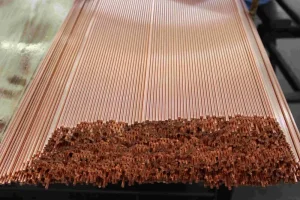
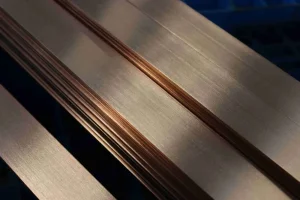
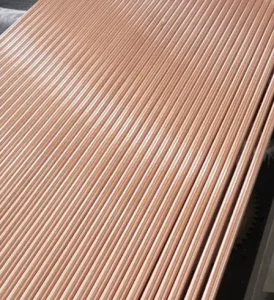
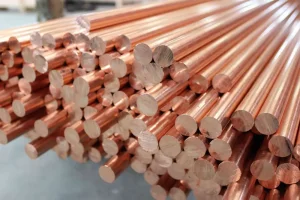
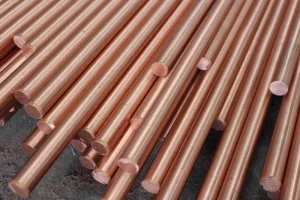
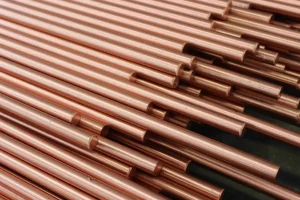
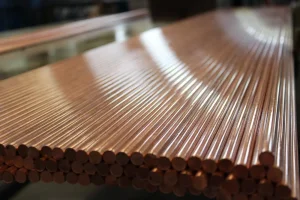
Oxygen-Free High Conductivity (OFHC) copper, classified under key standard designations like C10100 (OFE) and C10200 (OF), represents the zenith of high-purity metallurgy. Unlike standard commercial copper, which undergoes standard atmospheric refining, OFHC copper is melted and cast under strictly monitored vacuum conditions or in an inert atmospheric gas environment. This metallurgical precision reduces residual oxygen content to less than 0.001% (10 ppm), resulting in an ultra-pure material capable of reaching an electrical conductivity rating of at least 101% IACS (International Annealed Copper Standard).
From an metallurgical perspective, reducing oxygen levels is crucial not only for boosting electrical and thermal conductivity but also for mitigating the risk of hydrogen embrittlement. When oxygen-bearing copper (such as C11000 ETP) is exposed to hydrogen gas at temperatures exceeding 400°C, the hydrogen diffuses into the metal crystal lattice, reacts with cuprous oxides, and forms pressurized water vapor microscopic pockets. These vapor pockets create intergranular fissures along the grain boundaries, which leads to sudden mechanical failure. OFHC copper entirely avoids this liability, making it the default specification for vacuum chambers, high-temperature heat exchangers, and glass-to-metal vacuum seals.
"By removing trace cuprous oxides, OFHC copper rods exhibit unprecedented ductility, stable electrical pathways at cryogenic temperatures, and high resilience under extreme thermal cycles. For mission-critical industrial applications, choosing certified OFHC copper is a functional necessity."
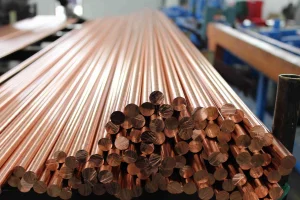
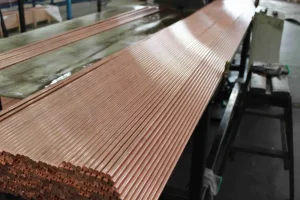
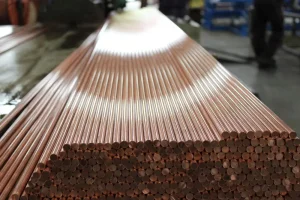
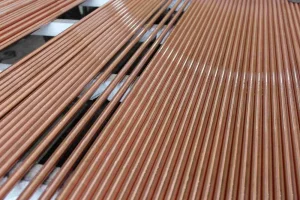
The manufacturing process of high-performance OFHC copper rods requires careful attention to trace impurities. Extraneous elements like phosphorus, iron, lead, and arsenic, even in concentrations under 0.005%, significantly disrupt the atomic lattice uniformity, increasing electrical resistance. This is why四川科派新材料 (Sichuan Kepai New Materials) implements high-grade electrolytic cathodes as raw input and deploys advanced vacuum-induction melting techniques. The resulting copper rods maintain high purity, making them highly reliable for semiconductor manufacturing equipment and extreme-load electrical connectors.
Established in May 2017, Sichuan Kepai New Materials Co., Ltd. has established itself as an innovative high-tech manufacturer specializing in high-conductivity, high-strength free-cutting tellurium copper, oxygen-free copper, and an array of high-grade copper alloys.
Spanning a state-of-the-art facility of 29,000 square meters, Kepai bridges the gap between advanced metallurgic theory and mass production capability. By integrating independent research, precision production, and global distribution, the company serves over 1,000 international enterprises, holding more than 30 utility and invention patents.
Watch Facility Video Tour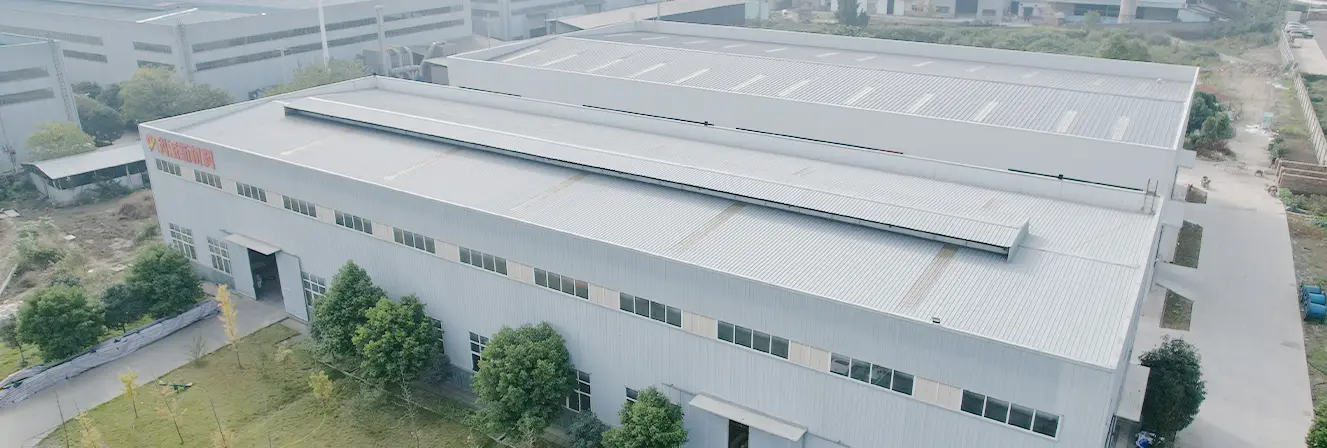



Market growth, technical demands, and global supply shifts
The global demand for OFHC copper rods has surged due to parallel transformations in electronics manufacturing, clean energy conversion, and ultra-high vacuum technology. With the rise of high-speed electronic systems, high-purity electrical pathways are no longer premium upgrades—they are essential requirements. Market data indicates that the global oxygen-free high-conductivity copper market is growing at an annual rate exceeding 6.2%, driven primarily by the transition to electric vehicles (EVs), advancements in high-frequency telecommunications (5G/6G), and space exploration initiatives.
Geographically, North America and Europe maintain a high demand for premium OFHC copper, primarily for aerospace manufacturing, high-energy research institutes (including CERN and nuclear research centers), and high-frequency microwave tubes. Meanwhile, the Asia-Pacific region, led by China, South Korea, and Taiwan, dominates the manufacturing consumption of OFHC copper rods for semiconductor packaging, consumer electronics, and electric vehicle battery interconnects. This regional distribution creates a highly integrated global trade dynamic: high-performance copper alloys must be refined under rigorous environmental and quality certifications in high-capacity Asian hubs, then customized and exported to meet demanding American and European engineering standards.
Ultra-pure sputtering targets and high-density lead frames rely on oxygen-free copper rods to prevent microstructure degradation and void defects.
High-power density traction motors, busbars, and rapid battery chargers require C10100/C10200 grade copper to handle high currents with minimal thermal loss.
In MRI equipment and high-energy particle accelerators, OFHC rods serve as the stabilizing matrix for NbTi or Nb3Sn superconducting wires.
Understanding how high-purity copper operates across distinct global industry conditions
In modern MRI scanners and advanced cancer radiotherapy installations, OFHC copper rods are machined into high-precision RF (Radio Frequency) shieldings and gradient coils. The absence of ferromagnetic trace elements (such as iron or nickel impurities) prevents magnetic field distortions, which is essential for capturing high-definition medical imagery.
The power electronics systems of modern EVs operate at high voltages (800V+) and currents. Custom OFHC copper rods are critical raw materials for high-voltage busbars, distribution components, and heavy-duty charging gun terminals. Their high electrical conductivity minimizes heat generation, optimizing efficiency and safety.
In satellite communications, high-altitude aircraft generators, and spacecraft engine cooling jackets, copper components are subjected to extreme pressure differentials and thermal ranges. Custom C10100 rods ensure high grain stability, gas-tight seals, and stable structural characteristics under deep-space thermal environments.
Marine environments expose components to high corrosion risks and biological fouling. Copper alloys are widely utilized in ocean engineering due to their natural resistance to marine biofouling. For subsea power connections and instrumentation, high-purity copper provides low signal attenuation and excellent structural resilience.
Plasma cutting torches require electrodes that can withstand extreme heat and electrical arcs without rapid wear. High-conductivity alloys, such as oxygen-free tellurium copper, are used here to combine high wear resistance with optimal electrical discharge properties, extending the operational life of the torch nozzle.
Electrical grids and substations rely on heavy-duty contactors, switchgears, and breakers to manage high-voltage grids. OFHC copper provides low contact resistance, reducing energy loss and ensuring stable current distribution during grid grid-switching operations.
Understanding scientific developments, structural engineering, and sustainable manufacturing paths
As microelectronics and power systems continue to advance, the technical specifications for OFHC copper rods are becoming increasingly stringent. The industry's current development roadmap focuses on optimizing copper's crystalline structures to improve mechanical strength without compromising electrical conductivity.
One primary technical path involves micro-alloying and severe plastic deformation (SPD). Standard pure copper exhibits low yield strength, which can limit its use in high-stress applications like rotating electric motor rotors. By introducing trace elements (such as chromium, zirconium, or tellurium) and utilizing precise thermal processing, metallurgical engineers can create copper alloys with ultra-fine grain structures. This enables the production of copper rods with high mechanical strength while maintaining over 95% IACS electrical conductivity.
The transition toward Additive Manufacturing (AM) is also transforming the copper industry. Traditionally, copper's high thermal conductivity and reflectivity made 3D printing with standard laser powder bed fusion (LPBF) systems highly challenging. However, the development of green and blue laser technologies has made 3D printing high-purity copper parts highly viable. Modern manufacturers are now designing OFHC copper rods optimized for atomization into high-purity powders, enabling the production of highly complex heat sinks and induction coils with zero material waste.
Finally, sustainability is a key focus of the industry's roadmap.四川科派 (Sichuan Kepai) is addressing this by prioritizing energy-efficient vacuum induction melting (VIM) and continuous upward casting systems. These technologies reduce carbon emissions and gas consumption, enabling the sustainable production of premium-grade copper alloys that support both high performance and environmental compliance.
Why China's integrated industrial hubs offer unbeatable speed, reliability, and precision
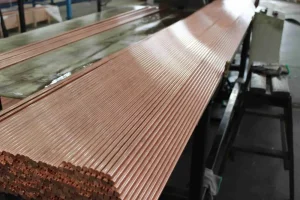
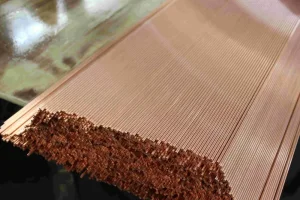
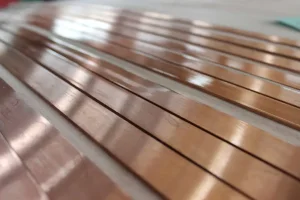
Chinese copper manufacturing hubs, such as Sichuan Kepai, benefit from localized vertical integration. From raw cathode smelting and continuous upward casting to multi-stage cold drawing and precise heat treatment, every production stage occurs in a unified ecosystem. This integrated setup minimizes transit delays, reduces processing waste, and allows for rapid customization of rod diameters, temper states, and surface profiles.
Keeping pace with global demand requires advanced quality control instrumentation. Kepai's laboratory is equipped with state-of-the-art testing systems, including optical emission spectrometers (ICP-OES), oxygen-nitrogen determinators, and high-frequency metallographic microscopes. Every shipment of custom OFHC copper rods is backed by complete material traceability, offering clients detailed mill test reports (MTRs) certifying exact chemical compositions and physical properties.

Ensuring compliance with international standards for high-stakes industrial applications
Operating in global markets like the European Union, Americas, and East Asia requires rigorous compliance with environmental, chemical, and health regulations.四川科派 (Sichuan Kepai) ensures that all OFHC copper rods meet strict international standards, enabling smooth import clearance and seamless integration into final products.
Practical answers to key questions from procurement officers and design engineers
Comprehensive metallurgical portfolio engineered by Sichuan Kepai New Materials
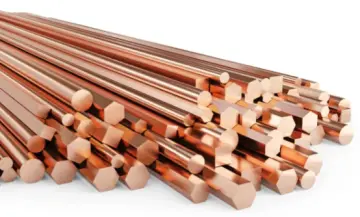
C19160 (CuNiSiCr) is a high-performance precipitation-strengthened copper alloy. Strengthened through heat treatment, it provides high mechanical strength, excellent electrical conductivity, and outstanding softening resistance.
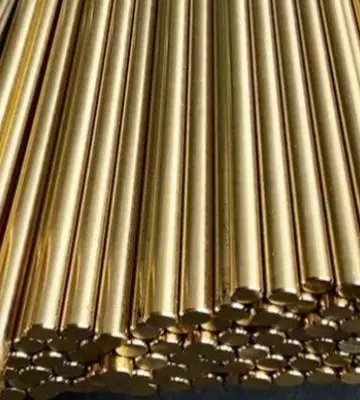
An engineering material that balances cold forming properties, comprehensive mechanical strength, and moderate cost. Ideal for deep drawing, cold heading, and complex stamping.
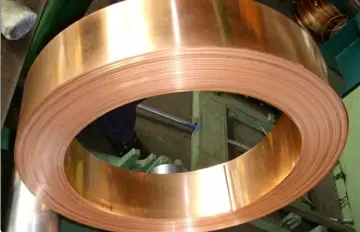
A classic tin-phosphorus bronze (CuSn4) designed for high-performance elastic components. Features high strength, wear resistance, and corrosion resistance.
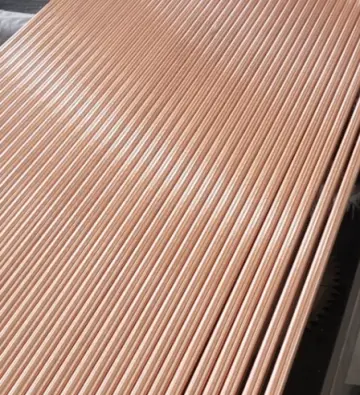
A high-purity tin-phosphorus bronze alloy offering excellent mechanical strength, low friction coefficient, good elasticity, and high fatigue resistance.
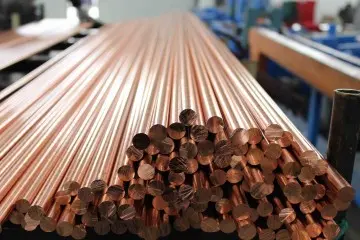
A high-performance precipitation-hardening copper alloy with trace lead addition to improve free-cutting performance while maintaining high electrical conductivity and yield strength.
Engineered for high-reliability electrical connectors and precision springs, offering high elastic limit, fatigue resistance, and stable conductivity.
Premium solutions for global electrical, thermal, and aerospace manufacturing
 Kepai New Material