Select high-purity, structurally dense, and certified copper-based materials engineered by Sichuan Kepai New Materials to withstand extreme operational stress.
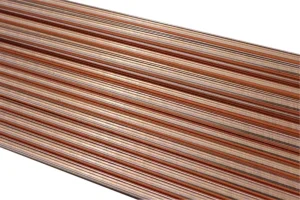
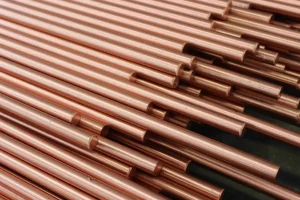
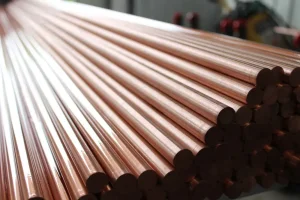
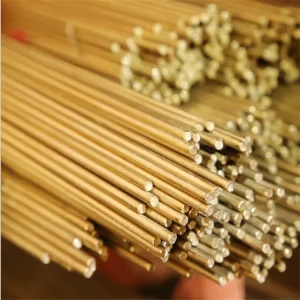
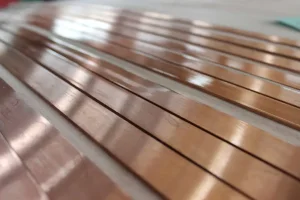
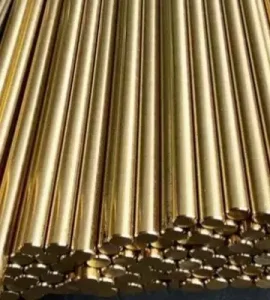
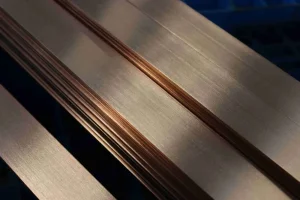
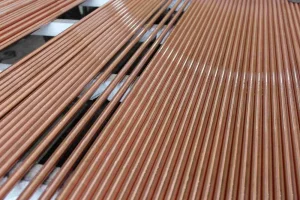
Beryllium Cobalt Copper (primarily designated under unified numbering systems as UNS C17500 and UNS C17510) is an elite engineered precipitate-hardened copper alloy. It occupies a specialized metallurgical niche by resolving the classic industrial trade-off between electrical conductivity and mechanical tensile strength. While standard high-strength copper alloys like Beryllium Copper C17200 achieve superior mechanical tensile limits (~1400 MPa) at the expense of conductivity (dropping to 20% IACS), Beryllium Cobalt Copper maintains a remarkable 45% to 60% IACS (International Annealed Copper Standard) electrical conductivity while providing tensile yields exceeding 700 to 800 MPa.
From a chemical standpoint, the addition of precise alloying elements—typically 0.4% to 0.7% Beryllium (Be) and 2.4% to 2.7% Cobalt (Co)—initiates a highly stable atomic alignment under heat treatments. When undergoing precipitation hardening, secondary phases such as cobalt-beryllide (CoBe) sub-microscopic particulates disperse evenly throughout the face-centered cubic (FCC) copper matrix. This precipitation effectively blocks dislocation movement inside the grain boundary network without excessively scattering electrons, ensuring extreme physical durability alongside outstanding current transmission.
Furthermore, Beryllium Cobalt Copper alloys demonstrate exceptional resistance to stress relaxation and thermal degradation at continuous working temperatures of up to 350°C. Standard chromium copper or pure brass structures deteriorate rapidly at these thermal thresholds, leading to rapid electrical degradation and critical system failure. For heavy duty environments, C17500 exhibits a thermal conductivity of roughly 240 W/m·K, enabling massive heat flux mitigation, which is vital for thermal dissipation in high-cycle resistance welding systems and complex modern plastic injection molds.
As advanced technology platforms adopt multi-gigahertz architectures and hybrid electrification grids, utilizing non-magnetic, spark-resistant, and high-fatigue alloys is no longer optional. Sichuan Kepai New Materials Co., Ltd. addresses this gap by utilizing vacuum induction melting processes to manufacture premium-grade C17500 and C17510 stocks that systematically reduce impurities like iron, lead, and phosphorus, preserving maximum theoretical physical performance.
Precision Metalwork Established in May 2017: A National Leader in Advanced Copper Alloy R&D
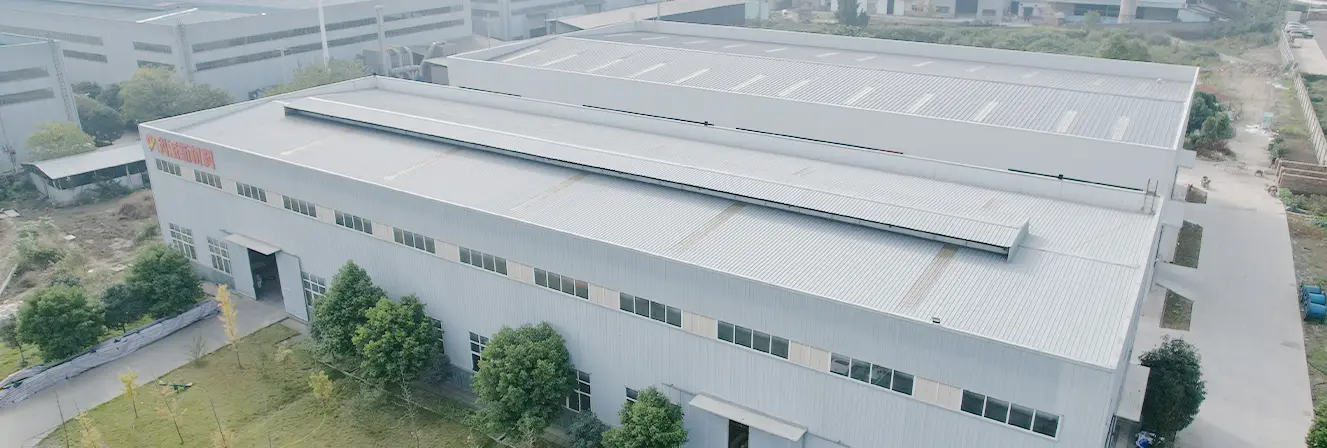
Sichuan Kepai New Materials Co., Ltd. was established to address the critical domestic and international demand for specialized, high-performance copper-based alloys. Operating from a modern, state-of-the-art 29,000 square meter production facility, we integrate structural design, material synthesis, rapid prototyping, extrusion, heat treatment, and precision finishing within a single secure supply framework.
By investing heavily in academic collaborative research and in-house laboratory equipment (including high-resolution spectrometers, ultrasonic flaw detectors, and mechanical tensile stations), Kepai has successfully registered over 30 key patents. Our team specializes in solving complex metallurgical problems, establishing proprietary processes for oxygen-free casting, and manufacturing highly conductive, friction-resistant copper materials, securing a crucial role in international supply systems.
Understanding the macroeconomic forces, clean energy shifts, and safety criteria defining modern high-spec procurement.
Global Electric Vehicle (EV) platforms demand rapid charging stations capable of transferring megawatt currents without overheating. Beryllium Cobalt Copper provides the necessary thermal conductivity and mechanical wear properties required for dynamic charging couplings and internal busbars, sustaining 10,000+ insertion cycles safely.
With the expansion of modern low-Earth-orbit (LEO) satellite constellations, aerospace agencies require ultra-reliable connector pins that operate consistently in the vacuum of space. The structural stability of C17510 under dramatic temperature changes (-100°C to +200°C) prevents signal distortion and connector deformation.
In the high-speed plastic packaging and consumer electronics manufacturing sectors, cooling cycle time dictates profitability. By inserting high-conductivity Beryllium Cobalt Copper inserts into critical hot-spot zones of steel molds, cycle times drop by 20% to 40%, generating substantial operational cost savings.
Modern European and American procurement protocols demand strict adherence to environmental regulations (RoHS, REACH) and non-hazardous manufacturing practices. Procuring from an ISO-certified manufacturer like Sichuan Kepai guarantees certified material composition and trace safety reports.
Leveraging Industrial Digitalization, Automated Processing, and Deep Port Logistics
Modern global logistics require more than just raw material synthesis; they demand a reliable, resilient supply chain that mitigates sudden geopolitical disruptions and price volatility. Sichuan Kepai New Materials implements **China Factory 4.0** digital operations throughout its manufacturing footprint. By integrating automated temperature tracking systems during induction melting and digital deformation controls on extrusion presses, we maintain consistent microstructures across batches of Beryllium Cobalt Copper rods, plates, and customized configurations.
Our strategic operations in Sichuan leverage reliable regional clean energy inputs (specifically, extensive local hydroelectric infrastructure), reducing the net carbon footprint of our manufacturing. Furthermore, our deep integration with direct shipping lanes and efficient logistical networks guarantees timely delivery of high-volume consignments directly to key hubs in North America, Western Europe, and Southeast Asia.
With an agile production system, Kepai easily customizes profiles to order, matching specific temper classes (such as AT, HT, or pre-hardened mill finishes) to specialized client machining workflows, eliminating material waste and reducing client processing times.

Compare structural and physical parameters for C17500 and C17510 against conventional high-strength copper grades to make an informed, data-driven procurement choice.
| Alloy Specification Grade | Beryllium Content (wt. %) | Cobalt / Nickel Content (wt. %) | Electrical Conductivity (% IACS) | Tensile Strength (MPa) | Rockwell Hardness (HRB / HRC) | Thermal Conductivity (W/m·K) |
|---|---|---|---|---|---|---|
| C17500 (Beryllium Cobalt) | 0.40 - 0.70% Be | 2.40 - 2.70% Co | 45 - 60% | 680 - 960 | 92 - 100 HRB / 20 - 30 HRC | 240 |
| C17510 (Beryllium Nickel) | 0.20 - 0.60% Be | 1.40 - 2.20% Ni | 45 - 60% | 680 - 1000 | 95 - 102 HRB / 22 - 32 HRC | 245 |
| C17200 (High Strength BeCu) | 1.80 - 2.00% Be | 0.20% (Co+Ni) | 15 - 25% | 1100 - 1450 | 36 - 42 HRC | 105 |
| CuCr1Zr (Chromium Zirconium) | 0.00% Be | 0.00% Co / Ni | 75 - 80% | 350 - 520 | 65 - 80 HRB | 320 |
Where raw physical capacities turn into strategic, failure-proof operational solutions on the factory floor.
Used extensively as welding electrode tips, wheels, and shafts when joining stainless steels and high-strength galvanized automotive sheets. Standard tips deform under high-cycle thermal loads, whereas C17500 tips retain their shape, ensuring uniform electrical current flow and structurally sound welds.
Ideally positioned in critical zones where heat must be extracted quickly from hot polymer resins. Beryllium Cobalt Copper inserts prevent local heat buildup, warpage, and shrinkage in complex plastic geometries, directly boosting product quality and reducing cycle times.
Subsea drilling sensors, high-load mechanical bushings, and deep-sea telecommunication housings rely on Beryllium Cobalt Copper alloys. The combination of excellent corrosion resistance, anti-galling performance, and non-magnetic properties prevents biofouling and material failure under heavy hydrostatic load.
Highly suited for heavy electrical switchgears and dynamic terminal contact points in high-voltage industrial distribution grids. C17500 exhibits reliable resistance to arc erosion, preventing physical fusion at high-temperature contact points and reducing circuit breaker maintenance costs.
At Sichuan Kepai, compliance and quality assurance are integrated directly into our core manufacturing workflows.
Our manufacturing facility operates under strict, internationally audited quality management systems. This guarantees consistent material tracking, structured product reviews, and full accountability across our entire production line.
We minimize industrial emissions and optimize power consumption by utilizing regional hydroelectric power grids. Our closed-loop scrap recovery systems prevent resource loss and protect our local ecosystems.
Employee safety is central to our operations. We maintain state-of-the-art ventilation systems, advanced particulate scrubbers, and strict personal protective equipment protocols for all handling and melting processes.
All exported Beryllium Cobalt Copper alloys undergo rigorous testing to ensure hazardous trace impurities are well below regulated international thresholds, ensuring hassle-free clearance through customs.
Answers to technical and engineering questions about the performance, safety, and applications of C17500 / C17510 copper-beryllium-cobalt alloys.
While both C17500 and C17510 fall under high-conductivity copper alloys and share similar performance ranges (45-60% IACS, 700-1000 MPa tensile strength), the difference lies in their chemistry. C17500 utilizes Cobalt (Co) as the primary stabilizing element (2.4-2.7%), whereas C17510 substitutes Cobalt with Nickel (Ni) (1.4-2.2%). C17500 is preferred in resistance welding electrodes due to its excellent wear resistance at high temperatures. In contrast, C17510 is often used in electrical connectors and telecom components where high spring performance is critical.
In their solid, finished forms (like rods, bars, or finished contact pins), Beryllium Cobalt Copper alloys are completely safe and inert, presenting no health hazards. The solid material is widely used in subsea communication, aerospace hardware, and medical tooling without issue. Potential inhalation hazards only occur if the alloy is processed in a way that generates ultra-fine dust or fumes—such as during high-heat dry grinding, laser cutting, or vacuum melting. Sichuan Kepai maintains strict wet-machining protocols and localized high-efficiency vacuum filtration systems during production to ensure a safe workspace.
The processing of C17500 involves two key heat treatment stages: Solution Annealing and Precipitation Hardening (Aging). First, the material is heated to roughly 900°C to dissolve the alloying elements into a single-phase solid solution, followed by a rapid water quench. The material is then aged at around 450°C to 480°C for several hours. This step allows sub-microscopic cobalt-beryllium particulates to precipitate throughout the copper matrix. This structure restricts grain dislocation movement, increasing the material's hardness from ~40 HRB to up to 100 HRB, while simultaneously restoring electrical conductivity.
Yes. While Chromium Zirconium Copper (CuCr1Zr) is a popular, cost-effective electrode material for mild steels, its mechanical hardness drops sharply above 450°C. In high-volume applications like spot welding galvanized or stainless steel sheet metal, the tip temperature frequently exceeds 500°C. Under these conditions, CuCr1Zr tips soften and deform rapidly (often called "mushrooming"). Upgrading to C17500 Beryllium Cobalt Copper provides a significant boost in wear resistance at these high temperatures, ensuring consistent weld quality and extending tip life.
Sichuan Kepai is a highly accommodating direct manufacturer. For standard sizes of rods, sheets, and bars, we maintain a robust inventory, allowing us to ship quickly. For custom extruded profiles, we leverage our in-house tooling facility to create dies and ship finished products in as little as 3-4 weeks. MOQ values are flexible, accommodating both prototype development runs and high-volume industrial rollouts.
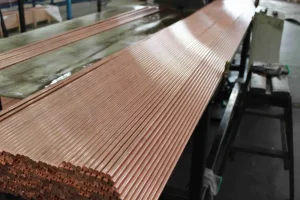
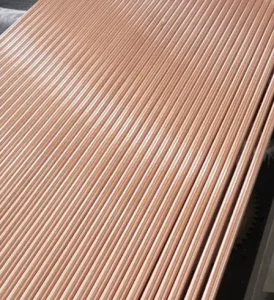
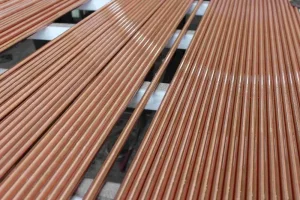
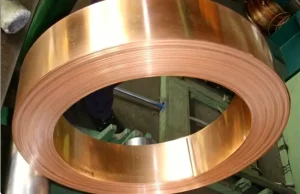
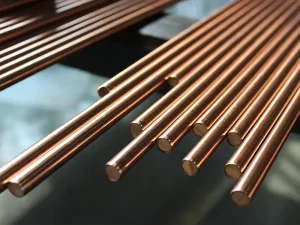
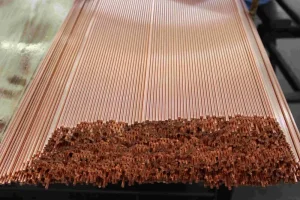
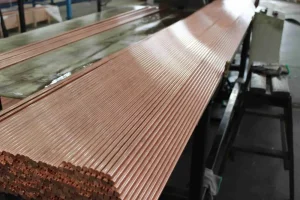
Discover our full product range, including ultra-conductive oxygen-free formulations, free-cutting bronze grades, and high-elasticity copper sheets.
Get in touch with our engineering team for custom quotes, technical drawings, material certifications, and expert answers to your application challenges.
Send Instant Inquiry Kepai New Material