 Kepai New Material
1 / 1
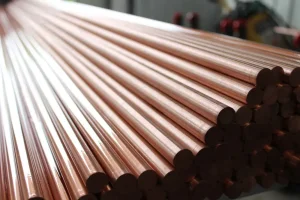
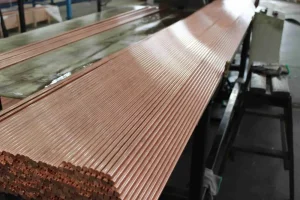
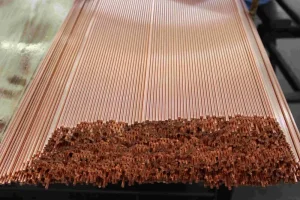
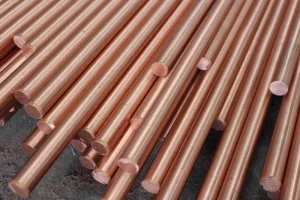
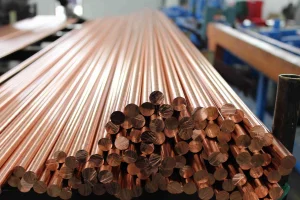
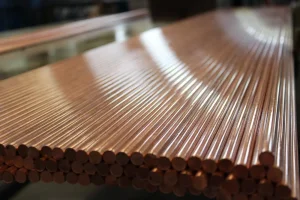
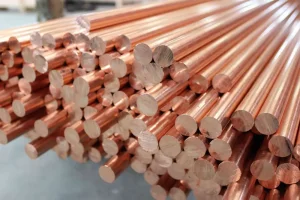
C11000 Pure Copper is a purple red metal, commonly known as "red copper". It is highly malleable; a drop-sized piece can be pulled into filaments up to two kilometers long or rolled into almost transparent foil larger than a bed. The most valuable property of C11000 is its excellent electrical conductivity, making it a leading material in the electrical industry.
Applications for C11000 are much more extensive than iron, with 50% of copper being purified into pure copper annually via electrolysis for electrical use. Trace impurities like phosphorus, arsenic, or aluminum can significantly reduce conductivity. Oxygen content also impacts performance, which is why copper for electrical industries is typically oxygen-free. Impurities like lead, antimony, and bismuth are minimized to prevent "hot brittleness" during processing.
High-purity copper is refined by electrolysis: impure copper (anode) and C11000 (cathode) are placed in a copper sulfate electrolyte. Under current, the anode dissolves and pure copper precipitates on the cathode, reaching a purity of 99.99%.
| Property | Unit | Value |
|---|---|---|
| Tensile Strength | Rm Mpa | ≥ 260 |
| Yield Strength | δ 0.5 Mpa | ≥ 205 |
| Elongation | % | ≥ 12 |
| Coefficient of Elasticity | Mpa | 127,000 |
| Heat Conductivity Coefficient | W/(m·K) | 375 |
| Property | Unit | Value |
|---|---|---|
| Electrical Conductivity | %IACS | ≥ 95 |
| Hardness | HRB | 35-55 |
| Fabrication Process | Property / Temperature |
|---|---|
| Softening temperature | 350 °C |
| Capacity for being cold worked | Excellent |
| Capacity for being hot formed | Excellent |
| Hot working temperature | 750-875 °C |
| Annealing temperature | 425-650 °C |
| Machinability rating (Free Cutting Brass=100) | 30 |