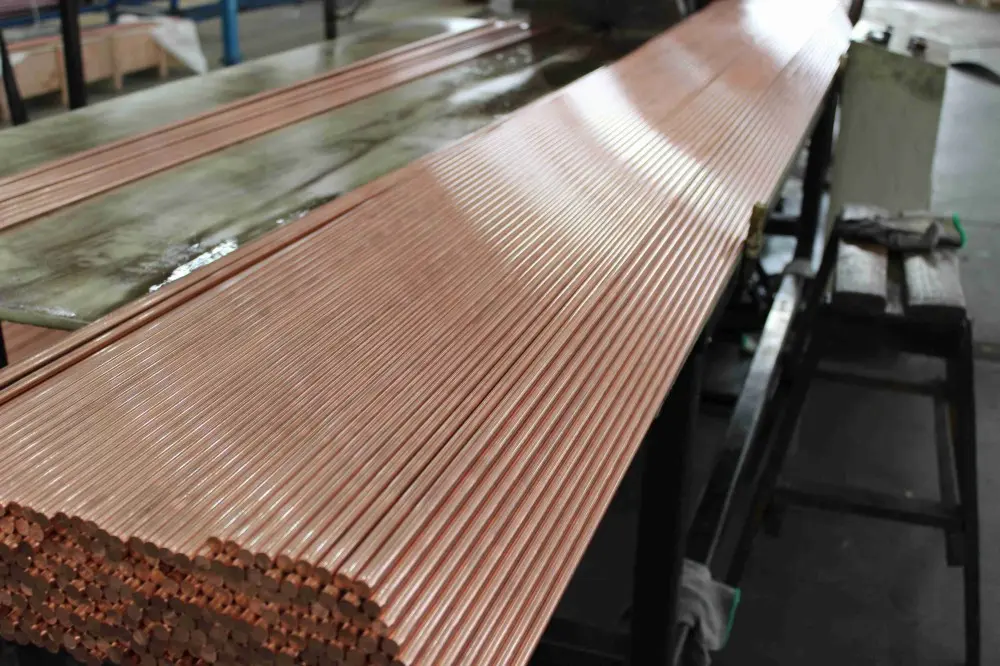
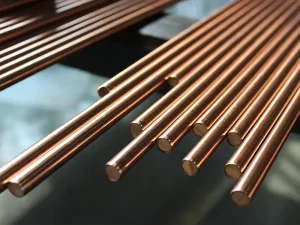
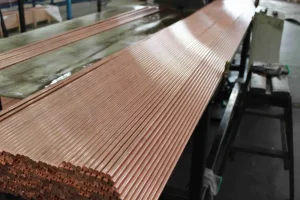
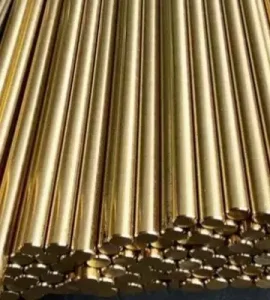
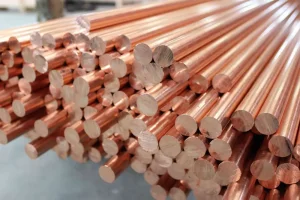
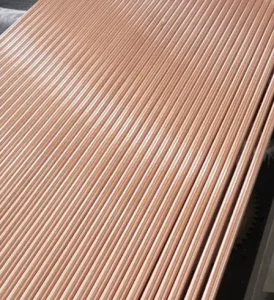
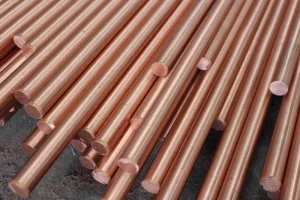
The production process has been innovated to develop oxygen-free high conductivity tellurium copper with independent intellectual property rights.
Low oxygen content (< 10ppm)
Extremely easy cutting non-stick tool
Good cold and hot working ability
High electrical and thermal conductivity
Excellent welding resistance
This material features extremely low oxygen content (equivalent to TU0 / C10200, less than 10ppm), providing exceptional mechanical, physical, and fabrication properties.
| Tensile Strength | Rm Mpa ≥ 260 |
| Yield Strength | δ 0.5 Mpa ≥ 205 |
| Elongation | % ≥ 12 |
| Coefficient of Elasticity | Mpa 117,000 |
| Heat Conductivity Coefficient | W/(m·K) 415 |
| Electrical Conductivity | %IACS ≥ 97 |
| Hardness | HRB 30-55 |
| Softening Temperature | 350℃ |
| Capacity for Being Cold Worked | Excellent |
| Capacity for Being Hot Formed | Excellent |
| Hot Working Temperature | 750-875℃ |
| Annealing Temperature | 425-650℃ |
- Hardware Processing: Complex, precision electrical components and machining parts.
- Cutting & Welding: Plasma and laser welding nozzles.
- Electrical Industry: Medium and low voltage components.
- Automotive: Contacts for electromagnetic switches and terminals.
- New Energy: High current charging gun connectors and lithium-ion battery poles.
FAQs
What makes this tellurium copper "oxygen-free"?
The material is produced using an innovated process that keeps oxygen content below 10ppm, equivalent to the TU0/C10200 standard, ensuring superior conductivity and workability.
How does the electrical conductivity compare to standard copper?
It maintains a high electrical conductivity of ≥97% IACS, making it ideal for high-efficiency electrical and new energy applications.
Is this material easy to machine?
Yes, it is specifically designed for "extremely easy cutting" with non-stick tool properties, which is perfect for complex precision machining parts.
What are the recommended working temperatures?
Hot working should be performed between 750-875℃, while the recommended annealing temperature range is 425-650℃.
In which industries is this material primarily used?
It is widely used in hardware processing, plasma/laser cutting, automotive electronics, and the new energy sector, specifically for charging connectors and battery poles.
What is the softening temperature?
The material has a softening temperature of 350℃, maintaining its structural integrity under moderate thermal stress.
 Kepai New Material