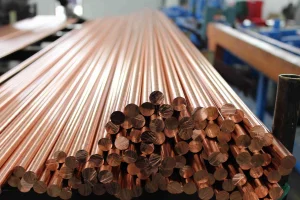
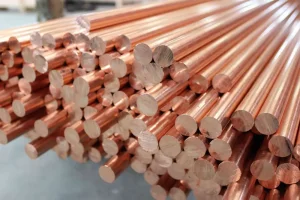
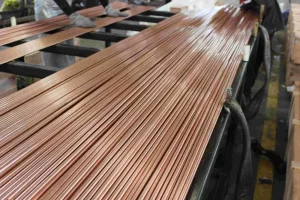
Tokyo stands as a global beacon for high-tech manufacturing, robotics, and miniaturized electronics. From the precision workshops of Ota City (Ota-ku) to the headquarters of multi-national conglomerates in Minato and Chiyoda, the demand for materials that can withstand extreme stress while maintaining electrical integrity is paramount. Beryllium Copper (BeCu), often hailed as the "King of Copper Alloys," is the backbone of this ecosystem.
In Tokyo's specific industrial landscape, BeCu is utilized not just for its conductivity, but for its unparalleled fatigue resistance and non-sparking properties. As Tokyo pushes toward "Society 5.0," integrating AI and IoT into every facet of life, the components within these systems—sensors, high-speed connectors, and micro-actuators—require the mechanical properties only found in age-hardened Beryllium Copper alloys like C17200 and C17300.
The global Beryllium Copper market is currently witnessing a paradigm shift driven by the Electric Vehicle (EV) revolution and 5G infrastructure rollout. While China and the United States remain massive consumers, Tokyo serves as a critical R&D hub where the next generation of alloy applications is defined. As a premier supplier, we bridge the gap between high-volume production and the surgical precision required by Japanese engineering standards (JIS).
Year of Establishment
Factory Space (SQM)
Global Customers
Patent Certificates
Established in May 2017, Sichuan Kepai New Materials Co., Ltd. is a high-tech private company specializing in R&D, production and sales of high conductivity and high strength free cutting tellurium copper and other special copper alloys. We provide Tokyo clients with a seamless supply chain of Beryllium Copper that meets stringent quality benchmarks.
Understanding the heat treatment process that allows BeCu to reach tensile strengths up to 1400 MPa, comparable to high-strength steels but with superior conductivity.
As Tokyo's electronics become smaller, we are developing ultra-thin foils (C17200) that maintain elastic modulus even at thicknesses below 0.05mm.
Balancing the trade-off between hardness and IACS% (International Annealed Copper Standard). Our C17510 and C17500 alloys are optimized for high-current EV charging pins.
For Tokyo's aerospace and medical industries, the roadmap involves enhancing the biocompatibility and corrosion resistance of copper alloys. We are currently researching tellurium-beryllium hybrid alloys to offer "free-cutting" capabilities without sacrificing the structural integrity required for surgical instruments manufactured in Japan.
BeCu offers nearly double the strength and significantly higher electrical conductivity than Phosphor Bronze. For Tokyo's high-end electronics, this means smaller components can carry more current without failing under mechanical fatigue.
Yes. Once finished and integrated into a device, Beryllium Copper is stable and non-toxic. It is widely used in Tokyo's medical manufacturing for MRI components and surgical tools due to its non-magnetic nature.
We provide streamlined export-import services with IATF 16949 and ISO 9001 compliance, ensuring that materials arrive at Tokyo ports or Saitama/Kanagawa logistics hubs with full chemical analysis reports.
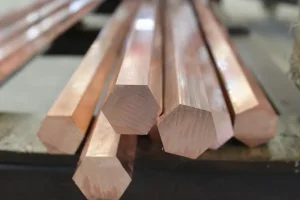
Absolutely. We specialize in OEM custom orders, providing small-batch foils, rods, and wires tailored for the rapid prototyping needs of Tokyo's engineering startups.
Our approach for the Tokyo market is a "Total Solution" model. We don't just ship raw material; we provide Material Science Consulting. This includes advising on the optimal heat treatment cycles to achieve specific Rockwell hardness values and offering technical support for CNC machining parameters when dealing with high-strength alloys.
In a world of fluctuating commodity prices, we offer Tokyo partners price-locking mechanisms and strategic stockpiling of Beryllium Copper ingots to ensure uninterrupted production, shielding Japanese manufacturers from global supply chain volatility.
 Kepai New Material