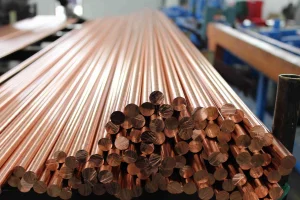
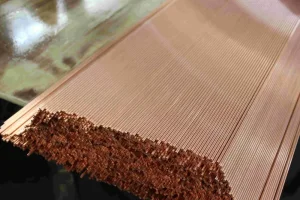
In the realm of advanced metallurgy, C173 Beryllium Copper (C17300) stands as a pinnacle of engineering, bridging the gap between extreme mechanical strength and exceptional electrical conductivity. As a "Free-Machining" variant of the legendary C17200, C17300 incorporates a strategic addition of lead (Pb), specifically designed to meet the rigorous demands of automated high-speed machining environments. This white paper explores why C173 is becoming the preferred choice for global Tier-1 manufacturers and how Chinese factory efficiency is reshaping the global supply landscape.
The global demand for C173 Beryllium Copper is currently driven by three massive industrial shifts: the electrification of transport, the miniaturization of 5G telecommunications, and the precision requirements of robotic surgery. Unlike standard copper alloys, C17300 offers a unique precipitation-hardening capability. This allows parts to be machined in a relatively soft state and then heat-treated to reach hardness levels comparable to high-grade alloy steels.
Currently, North American and European markets remain the highest consumers of C17300 for aerospace fasteners and oil-gas downhole tools. However, the Asia-Pacific region, led by China, has emerged as the manufacturing powerhouse, not just for raw material production but for finished, high-precision components.
The primary "Information Gain" for procurement officers lies in understanding the machinability rating. While C17200 is strong, its toughness can cause significant tool wear and slow cycle times. C17300, with its lead dispersion, allows for "chip-breaking" during CNC turning and milling. This results in:
Established in May 2017, Sichuan Kepai New Materials Co., Ltd. has redefined the value proposition for C17300. With a 29,000-square-meter facility, Kepai integrates R&D, casting, extrusion, and finishing under one roof. The Chinese efficiency advantage is no longer just about "labor costs"—it's about Vertical Integration and Rapid Prototyping.
Kepai’s proprietary "Oxygen-Free" casting technology ensures that the beryllium copper matrix is free from oxides, which are the primary cause of fatigue failure in conductive springs. By participating in industry standard formulations, Kepai ensures that every bar, rod, and wire meets international ASTM B196 and B197 standards while maintaining a competitive price point that Western mills struggle to match.
C173 Beryllium Copper is the "silent hero" in various localized high-tech scenarios:
The industry is moving toward "Sustainable Metallurgy." Kepai is at the forefront, developing alloys that minimize environmental impact through closed-loop recycling of beryllium-containing scrap. We are also researching low-lead alternatives that maintain the C173 performance profile to stay ahead of evolving REACH and RoHS regulations.
Our company has established its own independent R&D team, equipped with a complete production system and mature production technology.
Passed ISO9001:2015, ISO14001:2015, and OHSAS 45001:2018, reflecting international standards in quality and safety.
Developed high-conductivity oxygen-free tellurium copper with lower oxygen content than traditional materials.

Bactericidal and anti-inflammatory properties for precision medical components.
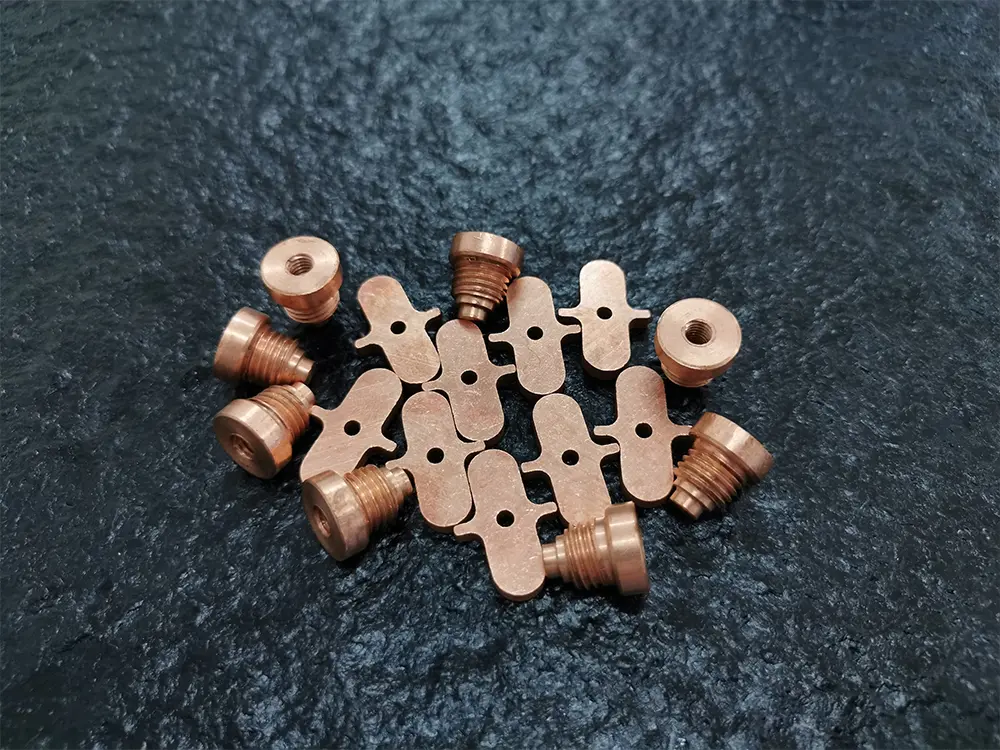
Optimizing system efficiency through superior thermal and electrical conductivity.

Ideal for generators, data transmission parts, and high-stress fasteners.

Resistance to seawater corrosion and marine biological fouling.
A: The primary difference is the addition of roughly 0.2-0.6% Lead (Pb) in C17300. While both alloys offer identical strength and conductivity after heat treatment, C17300 is significantly easier to machine, making it the industry standard for high-volume screw machine products.
A: Yes. To achieve its maximum hardness (up to Rockwell C45) and electrical conductivity, C17300 must undergo age hardening. Most suppliers provide it in a solution-annealed or cold-worked state (e.g., TD04 tempers).
A: C17300 contains lead for machinability, which falls under specific exemptions for copper alloys in many regulations. However, we also provide Lead-Free Beryllium Copper alternatives for clients with strict environmental mandates.
A: Every batch undergoes rigorous testing including ultrasonic flaw detection, conductivity testing (IACS%), and spectroscopic analysis. We provide full MTC (Material Test Certificates) with every shipment.
Connect with Kepai's engineering team for custom C17300 specifications and competitive OEM pricing.
 Kepai New Material