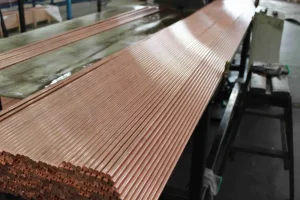
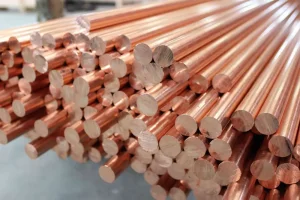
Engineered for Precision, Efficiency, and Reliability
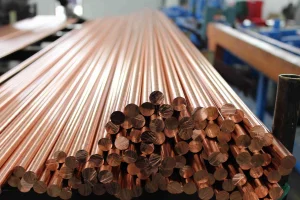
In the modern landscape of precision engineering, CW118C tellurium copper (technically classified under European standards and often equated with C14500 in the ASTM system) represents the pinnacle of material science for high-conductivity components. As a premier custom CW118C tellurium copper supplier, Sichuan Kepai New Materials Co., Ltd. recognizes that the global industrial shift toward miniaturization and high-speed electrical transmission demands materials that do not compromise on machinability or electrical integrity.
The global market for tellurium copper is currently experiencing an unprecedented CAGR, driven by the explosive growth of the New Energy Vehicle (NEV) market, 5G infrastructure, and aerospace innovation. Unlike pure copper, which presents significant challenges during high-speed CNC machining due to its "gummy" nature, CW118C incorporates a controlled percentage of tellurium (typically 0.4-0.7%). This addition acts as a chip-breaker, increasing the machinability rating to 85% relative to free-cutting brass, while maintaining a minimum electrical conductivity of 90% IACS.
IACS Conductivity
Machinability Rating
Patents Held
Global Clients
Leading the Industry with Oxygen-Free Tellurium Copper (OFT) Technology
Our proprietary OFT technology ensures oxygen content remains below 10ppm. This prevents hydrogen embrittlement during brazing and welding, a critical factor for high-voltage EV connectors and plasma cutting nozzles.
By optimizing telluride distribution within the copper matrix, we provide CW118C that allows for faster spindle speeds and longer tool life, reducing the total cost of ownership for CNC manufacturers.
As a responsible supplier, our manufacturing processes are ISO 14001:2015 certified. We focus on low-lead and lead-free alternatives that meet REACH and RoHS compliance for global markets.
The utility of CW118C tellurium copper extends across diverse specialized sectors. In Medical Equipment, the material’s high thermal conductivity and non-magnetic properties make it ideal for MRI components and medical electrodes. In the Aerospace sector, CW118C is utilized in high-performance connectors and generator parts where weight-to-performance ratios and electrical stability at fluctuating temperatures are non-negotiable.
A particularly significant application is found in Ocean Engineering. The alloy's inherent resistance to biofouling and seawater corrosion, combined with its ease of fabrication into complex shapes, makes it a preferred choice for underwater sensors and communication housings. As the demand for Custom CW118C tellurium copper grows,四川 Kepai New Materials provides tailored solutions, including specific tempers (half-hard, hard) and custom dimensions to meet localized engineering codes.
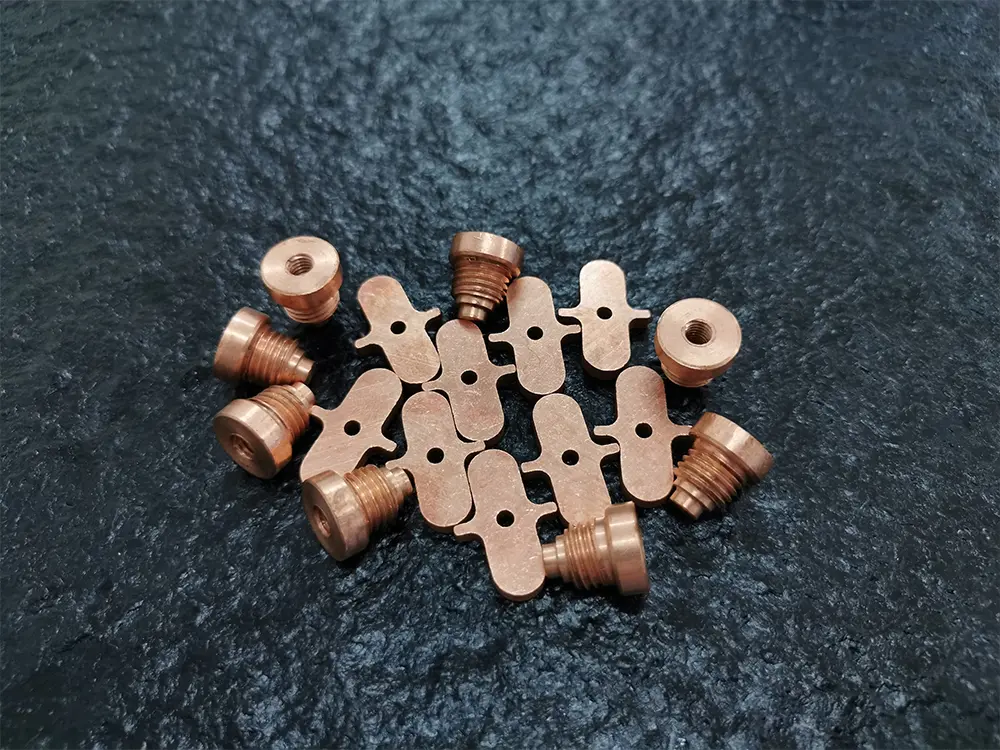
High-speed charging pins and battery terminals requiring low contact resistance and high heat dissipation.

Micro-connectors and switches where geometric stability during machining is paramount.
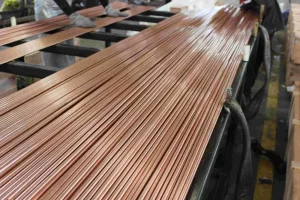
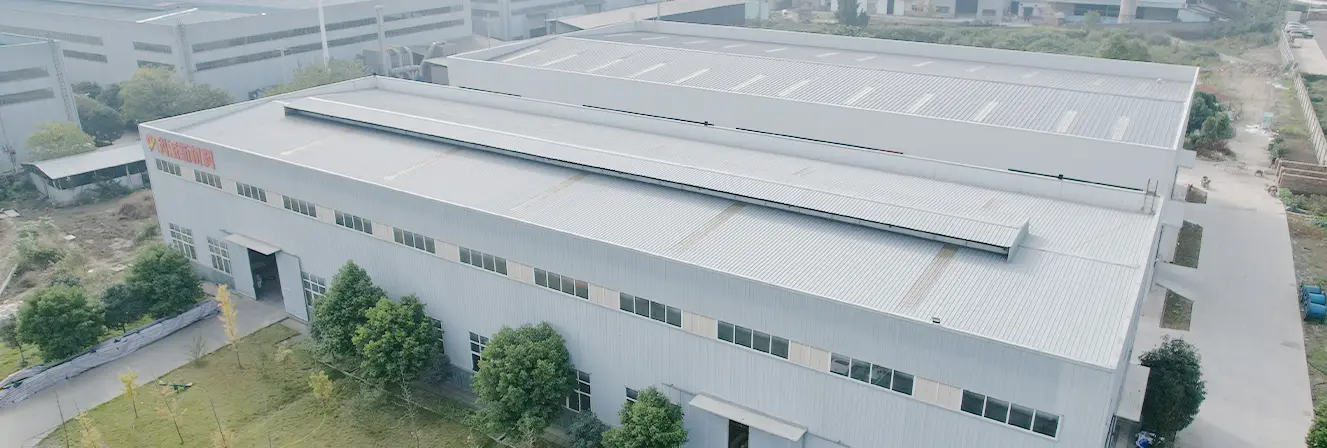
Established in 2017, Sichuan Kepai New Materials Co., Ltd. has rapidly ascended as a global leader in high-conductivity copper alloys. Operating from a 29,000 m² state-of-the-art facility, we serve over 1,000 customers worldwide. Our commitment to E-E-A-T (Experience, Expertise, Authoritativeness, and Trustworthiness) is reflected in our ISO 9001:2015, ISO 14001:2015, and IATF 16949 certifications.
Our R&D team is comprised of industry veterans who have pioneered "Oxygen-Free High-Conductivity Tellurium Copper," a material that sets new benchmarks for purity and performance. By controlling the entire supply chain—from smelting to precision finishing—we offer "Information Gain" to our partners, providing data-driven insights into material behavior under extreme industrial conditions.
Expert Insights into CW118C Procurement and Application
Essentially, they refer to the same metallurgical alloy (Copper-Tellurium). CW118C is the designation under the European standard (EN), while C14500 is used under the ASTM standard. Both offer high conductivity and excellent machinability.
Tellurium creates telluride inclusions that act as chip breakers during machining. While it does slightly affect the fluidity of the melt compared to pure copper, CW118C remains highly weldable and brazable, especially when oxygen content is strictly controlled (Oxygen-Free).
Oxygen-free variants (OFT) eliminate the risk of hydrogen embrittlement. This is crucial for components used in vacuum technology, high-voltage electrical systems, and any application involving high-temperature processing or welding.
Yes. Its excellent elasticity, combined with high conductivity and the ability to be machined into precise, complex geometries, makes it ideal for compliant pin technology used in automotive ECUs and connectors.
Supplying the World's Most Demanding Industries
 Kepai New Material