Explore our elite engineering products designed for advanced industrial operations.
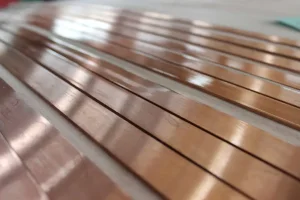
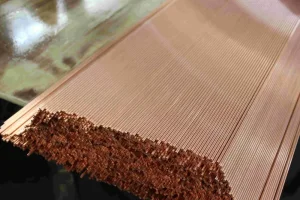
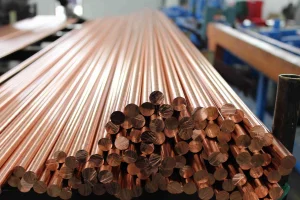
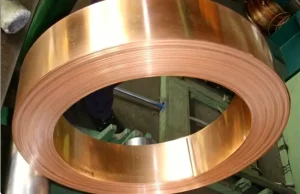
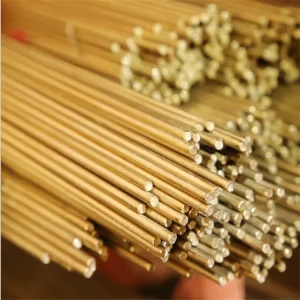
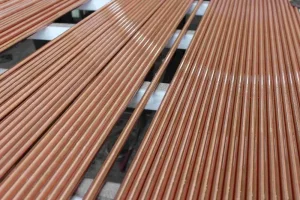
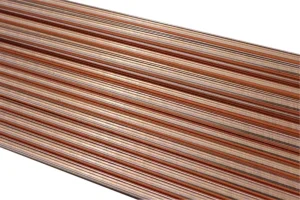
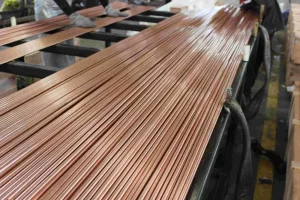
Aluminium Bronze alloys represent the absolute apex of high-performance copper-based metallurgy. Classified primarily under the C95000 to C95900 cast series and the C61000 to C64200 wrought series, these materials derive their exceptional structural characteristics from the precise addition of aluminium (typically between 5% and 12%), often enhanced with optimal fractions of iron, nickel, manganese, and silicon.
Unlike standard brasses or tin-bronzes, Aluminium Bronze exhibits a unique microstructural response to thermal treatment. The addition of iron serves as an effective grain refiner, while nickel significantly improves overall corrosion limits and wear dynamics by forming stable intermetallic phases—known in the engineering sector as the Kappa (κ) phase. This microstructural morphology provides the material with mechanical tensile strengths exceeding 800 MPa, rivaling medium-alloy steels while retaining the inherent electrical conductivity, non-sparking properties, and biofouling resistance characteristic of superior copper alloys.
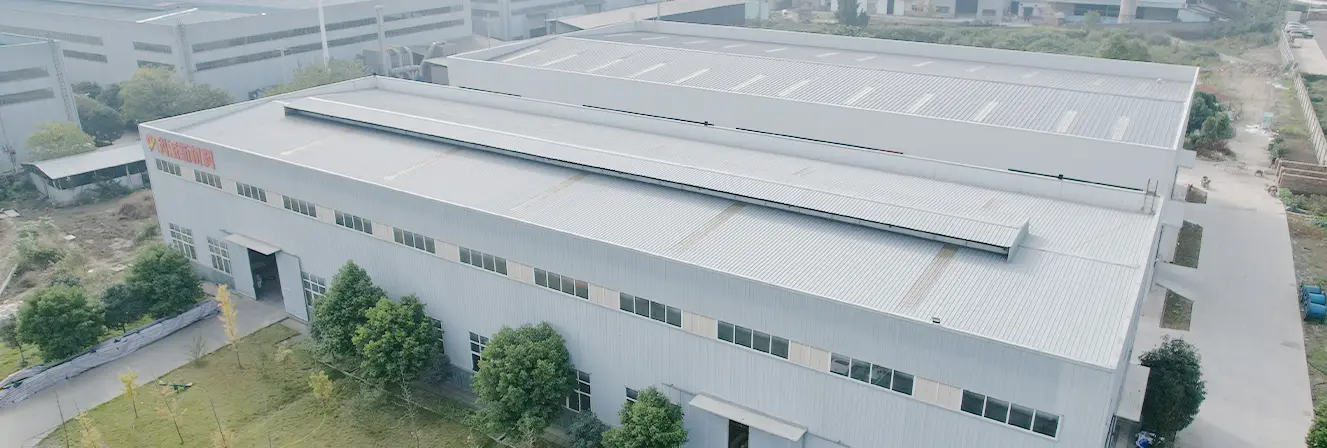



Established in May 2017, Sichuan Kepai New Materials Co., Ltd. has established itself as an innovative titan in high-performance copper and specialized copper alloy manufacturing. By merging scientific research with rigorous modern testing protocols, we serve the world's most demanding technology sectors.
Our metallurgical processes are completely validated by strict, accredited third-party auditing standard agencies. Kepai operates under unified international management guidelines, including ISO 9001:2015 (Quality Management Systems), ISO 14001:2015 (Environmental Protection Standards), and ISO 45001:2018 / OHSAS 18001 (Occupational Health & Safety Assurance). These certifications ensure every single production batch—from initial smelting and atmospheric controls to cold-drawing, heat treatment, and ultrasonic defect inspection—meets the precise safety and reliability standards required by global defense, aviation, maritime, and power-generation supply chains.
As manufacturing paradigms shift, China's modern alloy plants have evolved from basic casting shops into world-class high-precision research and engineering complexes.
Contemporary Chinese factories employ electromagnetic stirring and vacuum induction melting (VIM) to ensure pristine elemental homogeneity. This mitigates gas entrapment and minimizes interstitial impurities like phosphorus, carbon, and sulfur, which can compromise the tensile limits of heavy-duty bronze alloys.
By locating raw material refining, continuous casting, continuous extrusion, heat-treatment lines, and multi-axis CNC finishing centers within single industrial ecosystems, we dramatically cut down processing lead times, maintain strict custody of material traceability, and optimize structural yields.
Through high-capacity automated continuous manufacturing systems and optimization of thermal inputs, plants like Sichuan Kepai provide premium-grade specialized copper materials at incredibly competitive prices, without compromising metallurgical excellence or structural integrity.
As modern engineering pushes structural boundaries, specialized copper alloys are undergoing a significant technological renaissance. Discover how advanced materials meet demanding industrial challenges.
Due to their high resistance to marine biofouling and uniform corrosion rates in high-velocity seawater, Aluminium Bronzes (especially nickel-aluminium bronzes such as C95800) are critical for submarine propulsion systems, valve components, offshore oil pipelines, ship impellers, and desalination pumps.
In military and commercial aerospace structures, landing gear bushings, wing flap actuators, and structural pivot pins endure extreme mechanical loads during landing impacts. Using materials like AMS 4640 (C63000) ensures structural safety and prevents catastrophic friction-induced lockups.
Heavy-duty earth-moving machinery, hydraulic cylinders, underground drills, and power transmission gears rely on aluminium bronze wear plates and bushings. The alloy’s ability to survive in abrasive dust environments with minimal lubrication makes it an indispensable mechanical component.
Historically, engineers had to choose between alloys with high electrical conductivity (like pure copper) and those with high structural strength (like steel). The modern copper-alloy industry has broken this technological bottleneck. At Sichuan Kepai, we have pioneered specialized, precipitation-hardened, free-cutting copper alloys, along with high-conductivity oxygen-free tellurium coppers and high-durability beryllium-nickel-cobalt alloys.
By utilizing proprietary vacuum refining and rapid solidification techniques, we minimize structural dislocations at the molecular level. This enables the production of alloys that maintain up to 90% IACS electrical conductivity while achieving tensile strengths that are ideal for high-power electric vehicle battery connectors, automated welding guns, plasma cutting electrodes, and fast-charging infrastructure.

Procuring specialized copper and aluminium bronze alloys for critical industrial applications requires strict adherence to international standard compliance. To mitigate operational risk, international purchasing managers must look beyond unit pricing and focus on key performance indicators:
Expert answers to technical metallurgical and purchasing questions regarding aluminium bronze and advanced copper alloys.
Aluminium bronze alloys are unique because they form a dynamic, self-healing, and highly protective surface oxide layer of aluminium oxide (Al₂O₃) almost instantaneously when exposed to oxygen. This passive film acts as a robust barrier against chemical attack, chloride ions, cavitation damage, and uniform corrosion, outperforming stainless steels in high-velocity marine environments.
Yes, absolutely. High-strength grades like C95400 (9C) and C63000 (Nickel-Aluminium Bronze) exhibit tensile strengths of 75,000 to 110,000 psi (517 to 758 MPa), which comparable directly to low-to-medium carbon steels. In addition to high strength, aluminium bronze offers key advantages over steel, including non-sparking behavior, low wear friction, and superior corrosion resistance, making it ideal for environments where steel is prone to rust and seizure.
Iron (Fe) acts as a powerful grain refiner during the casting and crystallization phase, which significantly increases hardness and tensile properties. Nickel (Ni) enhances general wear resistance, toughness, and chemical stability, while preventing "dealuminification" (the selective leaching of aluminium in aggressive media).
Sichuan Kepai leverages a vertically integrated, ISO-certified system. This includes precision continuous casting, state-of-the-art oxygen-free vacuum smelting, high-force continuous extrusion, cold drawing for exceptionally tight dimensional tolerances, controlled atmosphere heat treatment, and 100% non-destructive ultrasonic testing.
Yes, our in-house metallurgical R&D team can engineer specialized chemical ratios and custom cross-sectional profiles (including complex continuous casting shapes, bars, plates, and tubes) to meet the unique mechanical specifications of your project.
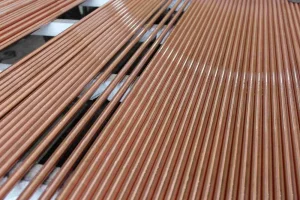
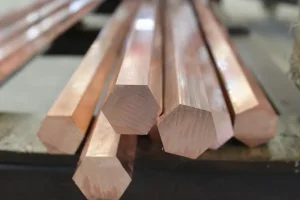
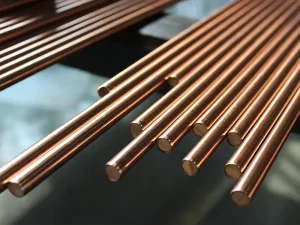
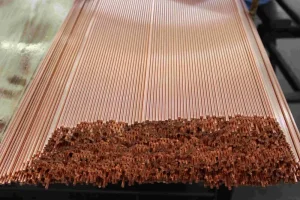
Extend your procurement capabilities with our full catalog of high-specification copper products.
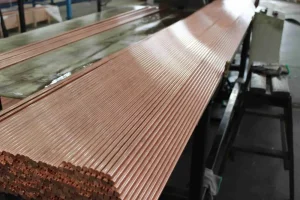
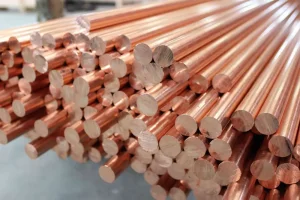
Need optimized mechanical wear components, customizable alloy structures, or detailed mill specifications? Contact Sichuan Kepai's engineering division today for an accurate technical consultation.
Send Technical Inquiry Now Kepai New Material