A technical overview of C11000 ETP (Electrolytic Tough Pitch) Copper alloy performance metrics compared to standard grades.
SEO & Engineering Insight: Material C11000 stands as the backbone of high-capacity electrical grids, precision switchgears, and power conversion units. By leveraging our state-of-the-art oxygenation monitoring and continuous casting technology, Kepai ensures a highly refined microstructure with minimal internal voids, achieving superior grain orientation that optimizes current density and heat dissipation pathways.
Explore our factory-direct alloy inventory with absolute dimensional accuracy and trace-element certifications.
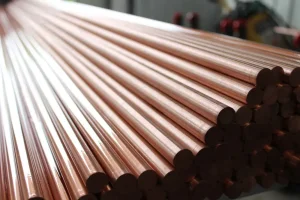
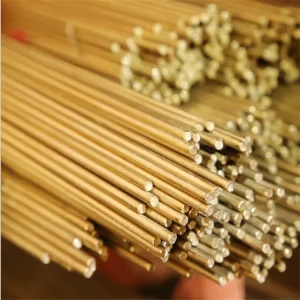
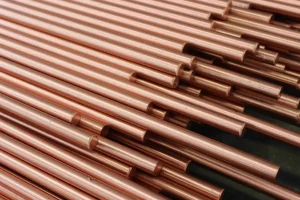

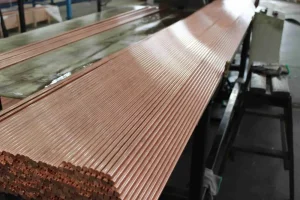
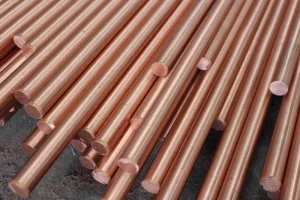
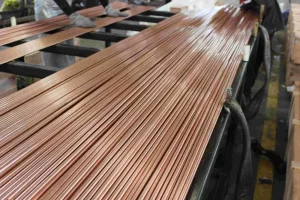
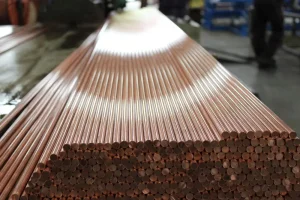
Providing complete quantitative transparency for supply chain managers, procurement leaders, and application engineers.
| Property Parameter | Technical Metric Value | Industry Standard/Test Compliance |
|---|---|---|
| Chemical Composition (Purity) | Cu ≥ 99.90% (inclusive of Ag) | ASTM B152 / B187 / DIN 1787 |
| Electrical Conductivity | ≥ 101% IACS (International Annealed Copper Standard) | ASTM B193 / IEC 60028 |
| Thermal Conductivity | 388-391 W/(m·K) at 20°C (68°F) | ASTM E1225 |
| Oxygen Content Range | 0.02% to 0.04% (Typical range for ETP alloys) | Spectrometric Verification |
| Tensile Strength (Hardness Dependent) | 220 - 380 MPa (Depending on temper H01 to H04) | ASTM E8/E8M |
| Elongation at Break | ≥ 15% - 40% (Forming depth optimization) | ISO 6892-1 |
In high-amperage applications, electrical efficiency is directly proportional to purity. C11000 (standardized as Cu-ETP under European norms) features highly controlled oxygen distribution. At Sichuan Kepai New Materials Co., Ltd., our proprietary furnace atmospheres during casting are strictly monitored. This ensures the uniform dispersion of sub-microscopic cuprous oxide (Cu2O) particles, preventing segregation at grain boundaries. This specialized microstructural integrity dramatically reduces resistivity fluctuations under dynamic thermal cycling, ensuring absolute reliability.
How Sichuan Kepai merges digital industrialization with automated metallurgical control systems.
Utilizing high-speed upward casting rigs running in zero-oxygen enclosures. This allows the seamless generation of oxygen-free and low-oxygen C11000 intermediate bars and wire-rods directly without cold drawing micro-fractures.
Every single casting shift is validated by online spark optical emission spectrometers (OES) and inductively coupled plasma mass spectrometry (ICP-MS) down to parts-per-million (ppm) levels to guarantee structural compliance.
Situated in Sichuan, Kepai utilizes trans-continental rail routes (China-Europe Express) and deepwater port routes via national high-speed freight systems to guarantee rapid dispatch and bypass high shipping surcharges.
Operational efficiency is reinforced by our extensive 29,000 square meters manufacturing hub. We optimize process parameters through a localized Manufacturing Execution System (MES). From raw material charge tracking through final high-precision hot-rolling and slitting operations, every process stage is recorded in an unalterable QA log database. This traceability is why top industrial clients trust Kepai as their primary wholesale partner.
C11000 applications across critical industrial segments.
High-conductivity C11000 busbars reduce internal voltage drop over distance. Essential for continuous power transmission inside high-density commercial PV solar farms.
Optimally designed C11000 windings handle severe current spikes during acceleration, withstanding dynamic mechanical stress and heat inside modern compact stator systems.
Used extensively inside high-tension electrical panels and medium-to-large custom transformers, ensuring stable grounding with high short-circuit load ratings.
C11000 maintains outstanding thermal transfer and mechanical stability at sub-zero ranges. Preferred for specialized medical imaging machinery and cooling arrays.
Pioneering scientific breakthroughs in microstructure modification and impurity isolation.
Traditional drawing methods create internal residual stresses that can trigger micro-fissures in ultra-fine component environments. Our technology team is commercializing a **Severe Plastic Deformation (SPD)** processing module. By applying controlled shear stresses at high pressure, we can modify the microstructural grain size down to sub-micrometer levels. This refinement improves tensile and yield strength while preserving the high conductivity of pure C11000 copper.
In high-temperature reducing atmospheres containing hydrogen, ETP copper is prone to steam embrittlement due to internal oxygen reacting with diffusing hydrogen. To address this without transitioning to expensive C10100 high-purity oxygen-free copper, our R&D team is developing a sub-microscopic surface diffusion barrier. This protective layer reduces oxygen migration, preventing steam pocket formation under intensive brazing operations.
Key risk-reduction strategies for multinational procurement managers.
Fluctuations in London Metal Exchange (LME) base prices directly affect production costs. We offer dynamic pricing frameworks, including forward-purchase contracts, to insulate our regular wholesale buyers from market volatility.
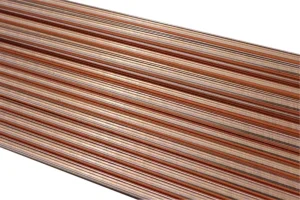
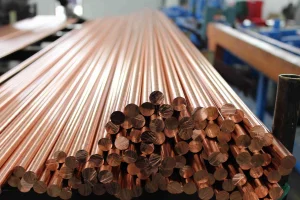
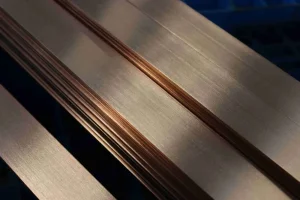
We supply C11000 in sheets, coils, strips, and rods with exceptionally tight dimensional tolerances (down to ±0.005mm). This precision prevents alignment errors in automated stamping lines, maximizing yields.
We provide full chemical composition analyses and heat trace code certifications with every delivery. This comprehensive quality record simplifies inbound validation for highly regulated industrial buyers.
Aligning manufacturing capabilities with evolving global regulatory frameworks.
To support seamless global supply integration, Sichuan Kepai ensures all distributed C11000 ETP materials comply with international environmental and engineering directives. Our chemical extraction processes eliminate restricted heavy metals, conforming to the latest **RoHS 3 (Directive 2015/863/EU)** and **REACH (EC 1907/2006)** registration lists.
Our localized logistic hubs in Europe, the Americas, and Southeast Asia streamline domestic customs clearances. This extensive supply network prevents project delays caused by import logistics bottlenecks, ensuring on-time delivery for large-scale infrastructure projects.
Detailed technical answers addressing common engineering challenges and processing considerations.
Browse additional specialized high-conductivity and durable structural alloys from our Sichuan factory lines.
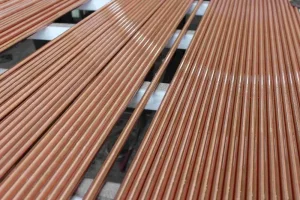
Submit your exact engineering dimensions, chemical specs, and delivery schedule requirements. Our metallurgists and pricing analysts will provide a comprehensive quote within 24 hours.
 Kepai New Material