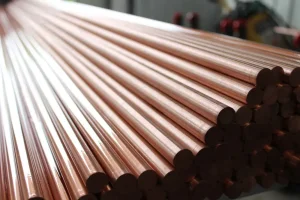
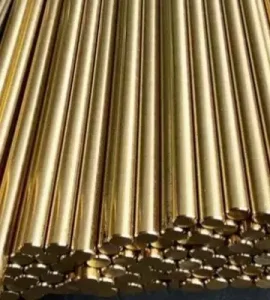
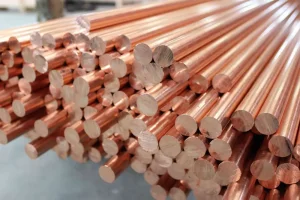
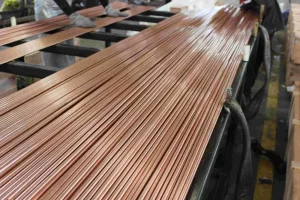
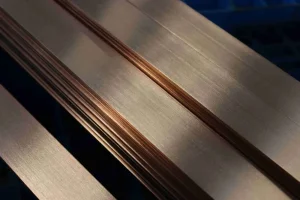
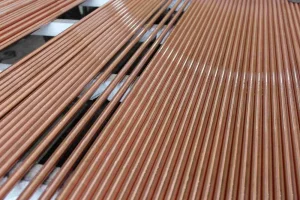
Explore our premium specialized copper and copper alloy production series designed for extreme conductive and heavy-duty industrial applications.
Specialized High-Performance Copper Alloy R&D and Manufacturing Leader
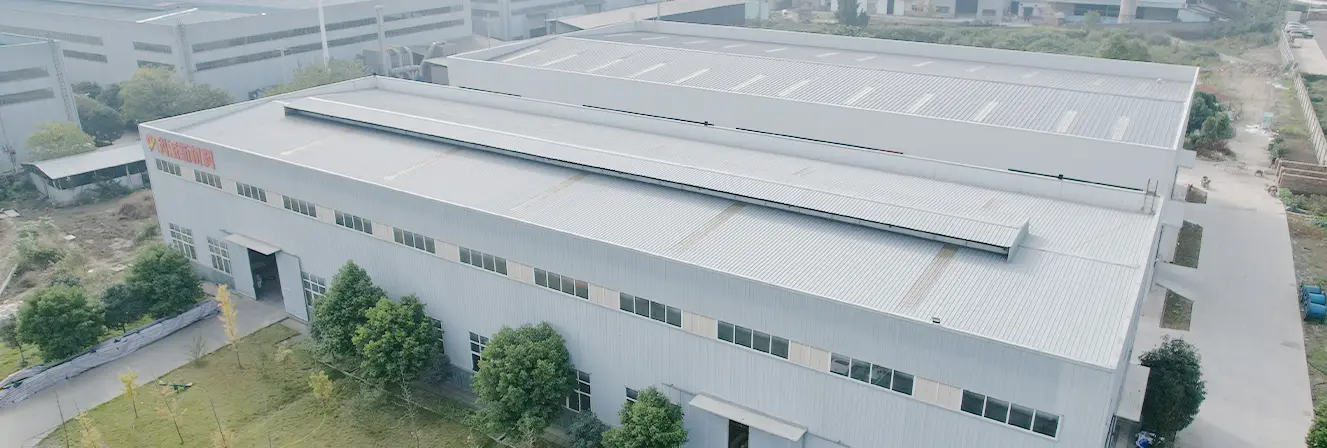
Established in May 2017, Sichuan Kepai New Materials Co., Ltd. is a high-tech private enterprise specializing in the intensive research, development, production, and sales of high-conductivity, high-strength free-cutting tellurium copper and other specialized copper alloys.
With an unwavering commitment to metallurgical breakthrough, Kepai has successfully addressed key structural dilemmas in the automotive, high-voltage switchgear, and aerospace markets. Our state-of-the-art facilities produce advanced grades including premium Beryllium Cobalt Copper (C17500) and related advanced solutions designed to satisfy high-end OEM specifications globally.


A deep metallurgical and commercial analysis on properties, manufacturing pipelines, supply chain resilience, and global industrial integration.
C17500 is fundamentally composed of Copper (Cu) alloyed with approximately 0.4% to 0.7% Beryllium (Be) and 2.4% to 2.7% Cobalt (Co). The strategic addition of cobalt enhances structural grain refinement and optimizes the kinetics of precipitation hardening. Unlike high-beryllium alloys such as C17200, which prioritize ultimate tensile strength over conductivity, C17500 is formulated to deliver outstanding heat and power transmission alongside excellent fatigue resistance.
The precipitation hardening process of C17500 involves two key thermal stages:
| Property Parameter | C17500 (CuCo2Be) Value | C17200 (CuBe2) Value | C17510 (CuNi2Be) Value |
|---|---|---|---|
| Beryllium Content (%) | 0.4 - 0.7 | 1.8 - 2.0 | 0.2 - 0.6 |
| Electrical Conductivity | 45 - 60% IACS | 15 - 25% IACS | 45 - 60% IACS |
| Tensile Strength (MPa) | 680 - 960 | 1100 - 1380 | 680 - 960 |
| Thermal Conductivity (W/m·K) | 200 - 240 | 105 - 130 | 200 - 240 |
| Hardness (HRB) | 90 - 100 | 36 - 42 HRC | 90 - 100 |
In modern industrial manufacturing, C17500 operates as an indispensable material in high-stress, high-temperature components. The global demand is currently driven by major upgrades in new energy vehicle (NEV) charging architecture, smart grid installations, 5G/6G RF switchgear, and aerospace landing gear assemblies.
OEM procurers and engineering companies face a major bottleneck: finding manufacturers capable of delivering highly uniform material microstructure. Disorganized phase precipitation or trace grain boundary impurities can lead to premature stress relaxation or cracking during heavy cyclic loading. Selecting a reliable OEM partner with advanced vacuum-induction melting capabilities, such as Sichuan Kepai New Materials, is paramount to mitigating critical operational risk.
C17500 is the premier choice for Class 3 resistance welding electrodes, projection welding dies, and mold tooling components, resisting deformation under extreme localized compression forces and temperature spikes.
With the integration of 800V fast-charging architectures, battery contact pins and high-voltage terminals require C17500 to prevent thermal runaway while maintaining high spring retention over life cycles.
Used widely in aircraft landing gear bushings, instrument control diaphragms, and subsea relay components due to its resistance to hydrogen embrittlement and marine bio-corrosion.
Employed in plunger tips for aluminum die-casting machines and core pins in plastic injection molds, where fast, predictable heat dissipation speeds up cycle times and increases productivity.
Purchasing C17500 materials directly from leading Chinese OEM factories like Sichuan Kepai New Materials yields extensive operational and economic benefits. Through vertical supply integration, our 29,000-square-meter facility executes complete control over the entire fabrication chain: from high-purity vacuum casting and horizontal continuous casting to precision extrusion, cold drawing, and rigorous heat-treatment processes.
Sichuan's regional energy reliability and advanced industrial clustering enable us to mitigate resource price fluctuations and ensure stable lead times. Unlike Western competitors with fractured logistics networks, Kepai maintains localized material inventories, reducing typical lead times from months to weeks. This unparalleled manufacturing efficiency directly optimizes overall procurement costs without compromising structural integrity or trace metallurgy controls.
The next decade of copper alloy applications will demand higher conductivity profiles paired with environmentally conscious manufacturing methodologies. Kepai is pioneering advanced grain-refinement techniques to minimize beryllium content while maintaining the peak mechanical thresholds of C17500. Through the introduction of trace zirconium and nickel additions, our metallurgy team is working on ultra-fine-grained variations that offer superior surface finish and excellent machinability, paving the way for next-generation micro-electronics.
Navigating global regulatory landscapes requires meticulous certification and compliance mapping. Sichuan Kepai’s manufacturing procedures strictly conform to ISO 9001:2015 (Quality Management), ISO 14001:2015 (Environmental Integrity), and OHSAS 45001:2018 (Occupational Health & Safety).
All C17500 shipments are fully backed by rigorous Mill Test Reports (MTRs), material tracing data, and complete RoHS and REACH certifications. We provide overseas engineering buyers with direct technical assistance, tailoring the hardness and conductivity tempers (TB00, TD04, TF00, HT) to your specific production demands.

Global Footprint Built on Trust & Engineering Excellence
In addition to securing a major share of the domestic high-performance copper alloy market, Kepai has exported its specialized materials to key industrial regions including North America, the European Union, East Asia, and South America.
Our commitment to rigorous international standards ensures our materials are fully approved by top tier automotive OEMs, aerospace contractors, and electrical engineering firms. We continue to expand our warehouse networks globally to support our clients with immediate delivery and direct engineering consultations.
Comprehensive engineering and procurement answers regarding Beryllium Cobalt Copper C17500 implementation.
Gain access to premium engineering consulting, custom metallurgical tempers, and direct manufacturing pricing from Kepai’s advanced casting facility.
Contact Our Metallurgical Engineers Kepai New Material