Explore Sichuan Kepai New Materials' top-tier structural alloy selection, manufactured to stringent international standards for thermal conductance, electrical efficiency, and mechanical resilience.
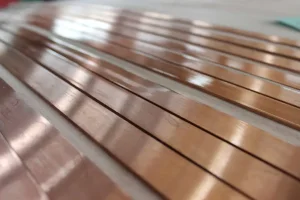
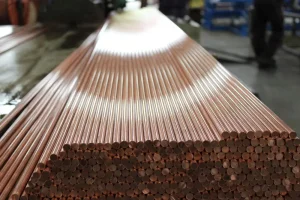
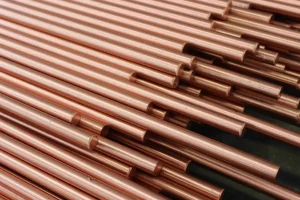
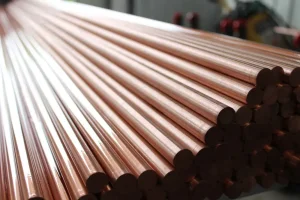
Sichuan Kepai New Materials Co., Ltd. (established in May 2017) is an industry-recognized, high-tech enterprise specializing in the production, global export, and systematic development of high-performance copper and specialized copper alloys. Rooted in rigorous empirical quality, our massive 29,000 square meter digital manufacturing plant processes specialized non-ferrous configurations designed specifically to drive high-conductivity and high-strength mechanical properties.
With an independent engineering team dedicated to solving high-stakes thermal and electrical application failures, Kepai has acquired more than 30 utility patents. We don't just supply raw copper plates, bars, and customized shapes—we engineer custom metallurgical solutions for demanding industries, maintaining compliance with top-tier international quality directives, including ISO 9001:2015, ISO 14001:2015, and ISO 45001:2018.
C11000, classified internationally as Electrolytic Tough Pitch (ETP) Copper, represents the structural and electrical backbone of high-performance modern industrial assemblies. Boasting a nominal purity of 99.90% metallic copper, C11000 is revered for its unmatched electrical conductivity (reaching or exceeding 100% IACS—International Annealed Copper Standard) and excellent thermal transfer metrics. ETP copper contains a controlled trace volume of oxygen distributed as tiny cuprous oxide (Cu2O) spheroids within its microstructure, acting as a natural grain refiner that promotes remarkable cold-working capabilities.
| Property Designation | Technical Value (Metric Units) | Value (Imperial Units) |
|---|---|---|
| Density (at 20°C / 68°F) | 8.89 g/cm³ | 0.321 lb/in³ |
| Electrical Conductivity (Annealed) | 100% - 101% IACS | 58 MS/m |
| Thermal Conductivity (at 20°C / 68°F) | 388 W/m·K | 224 Btu/ft²/ft/hr/°F |
| Tensile Strength Range (Annealed to Hard) | 220 - 380 MPa | 32,000 - 55,000 psi |
| Yield Strength (Offset: 0.5% Extension) | 69 - 310 MPa | 10,000 - 45,000 psi |
| Melting Point (Solidus / Liquidus) | 1083°C | 1981°F |
Unlike common structural brass alloys, C11000's crystal structure remains strictly single-phase face-centered cubic (FCC). This provides structural ductility down to near-absolute zero, preventing the cold-embrittlement failures common in iron-based metals. Furthermore, Kepai utilizes refined continuous casting and hot extrusion processes to minimize oxide segregation, ensuring that when the material is subjected to tight cold-bending, stamping, or deep-drawing profiles, it maintains high cross-sectional homogeneity without microscopic tearing.
In the contemporary macro-economic market, pure copper demand acts as a primary barometer for industrial modernization. As world economies rapidly transition toward complete decarbonization, ultra-high-efficiency electrical grids, smart cities, and distributed clean energy storage networks, premium grade C11000 has emerged as a high-demand commodity. The global transition from internal combustion engines to electric vehicle architectures has created unprecedented demand for reliable, high-integrity raw copper, which must be sourced from suppliers with proven manufacturing consistency.
Kepai New Material serves clients in Europe, the Americas, Southeast Asia, and the domestic market, providing high-purity alloys to tier-1 component builders and heavy electrical equipment designers.
Our strategic sourcing channels protect customers from raw commodity volatility, ensuring stable pricing models and continuous output even amidst global logistics disruptions.
Every batch of custom C11000 ETP copper leaves Sichuan Kepai with full mill chemical and mechanical certification, guaranteeing trace purity and standard alignment.
Because C11000 provides high-conductivity metrics and simple working options, it is preferred across varied heavy engineering sectors. Sichuan Kepai shapes and adjusts C11000 products to fulfill distinct operational roles:
Modern EV designs require dense, reliable power transport through busbars and battery pack connectors. Sichuan Kepai's C11000 foils and precision busbar stock offer minimal internal resistance, allowing safe high-current charging cycles and thermal control inside high-density lithium array enclosures.
MRI machines and advanced diagnostic suites require absolute electromagnetic isolation to produce clear results. Our large-format, high-purity C11000 shielding plates block external RF frequencies, helping high-tech medical systems operate without visual distortion or signal loss.
Aerospace platforms utilize custom C11000 windings inside high-output alternators, ground-power connections, and signal harnesses. Resisting microstructural shifts under extreme altitude-based temperature variations, our copper delivers consistent power generation efficiency.
Exposed marine environments trigger rapid biological growth and corrosion on structural components. C11000 provides natural antimicrobial and biostatic resistance, making it an excellent choice for protective cladding, seawater heat exchangers, and underwater hardware.
Industrial plasma systems rely on efficient heat dissipation at the electrode tip to sustain temperatures up to 20,000°C. Our specialized, dense C11000 copper billets extend electrode operational life, reduce machine downtime, and maintain high cut-face accuracy.
Sichuan Kepai provides dedicated material formulation, customized tolerances, and specialized geometric extrusion to align precisely with your technical blueprints.
Sichuan Kepai New Material operates as a solutions-driven manufacturing partner rather than a simple volume supplier. High-reliability industries cannot afford unexpected electrical resistance spikes, mechanical fractures, or out-of-tolerance copper components. Our internal quality control program relies on specialized production stages to ensure top performance:
By utilizing vacuum melting protocols for specialty copper formulations, we minimize dissolved hydrogen, nitrogen, and oxygen. This process limits interstitial microscopic impurities that could degrade the material's fatigue life.
Our rolling mills maintain strict dimensional control down to micron levels. Our customized surface treatments prevent rapid atmospheric oxidation, ensuring that our products arrive clean and ready for direct industrial integration.
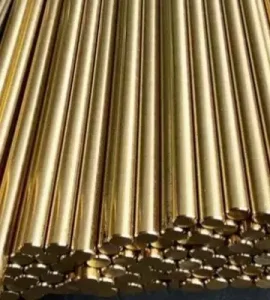
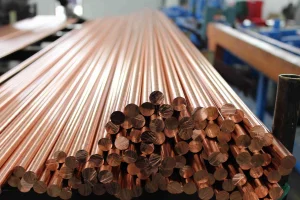
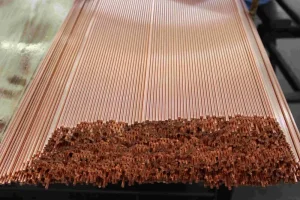
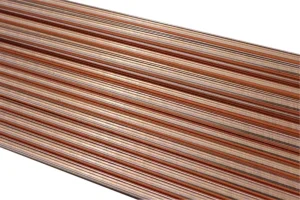
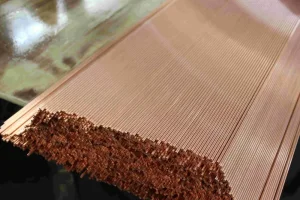
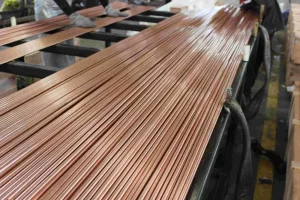
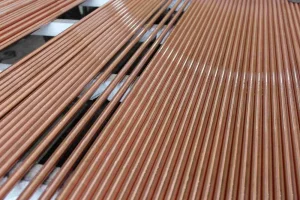
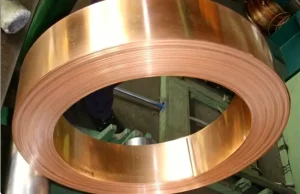
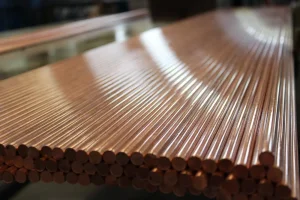
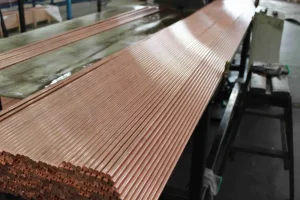
We offer diverse forms, including heavy copper plates, thin high-elastic foils, cylindrical rods, and complex hollow shapes. Our custom profiles reduce scrap loss for end manufacturers, optimizing production efficiency.
The future of high-purity copper production relies on merging metallurgical performance with eco-friendly manufacturing. Kepai New Material's development roadmap focuses on optimizing our green production footprint and scaling up clean-loop recycling initiatives. Traditional smelting processes are energy-intensive; therefore, we have upgraded our manufacturing equipment to lower total carbon emissions per metric ton produced.
Our R&D team is developing ultra-fine grain microstructures in C11000 copper. These structural refinements increase the material's fatigue limit without reducing its high conductivity—a key advancement for next-generation components subject to high mechanical stress, such as advanced robotic arms and wind turbine stators.
Explore solutions to common technical queries handled by Sichuan Kepai's engineering support desk regarding pure copper applications:
The main difference lies in oxygen content. C11000 ETP contains a small, controlled amount of oxygen (typically 0.02% to 0.04% in the form of cuprous oxide), which yields high conductivity. C10100 and C10200 are Oxygen-Free High Conductivity coppers (oxygen restricted below 0.001%). While both offer excellent electrical performance, oxygen-free grades are preferred for high-vacuum electronics or applications involving direct flame brazing, as they prevent hydrogen embrittlement.
C11000 can be brazed and soldered with excellent results. However, when using gas-shielded arc welding, care must be taken to avoid hydrogen-rich environments. The oxygen content in C11000 ETP can react with hydrogen at temperatures above 400°C, forming steam pockets along the grain boundaries that can cause micro-fissures (hydrogen embrittlement). For high-temperature structural welding, inert gas shielding or oxygen-free copper grades are recommended.
For recrystallization and stress relief after heavy cold deformation, C11000 is typically annealed at temperatures between 375°C and 650°C (700°F to 1200°F). The exact temperature depends on the degree of prior cold work and the desired final grain size. Rapid cooling or quenching in water after annealing can help remove loose surface oxides.
Sichuan Kepai utilizes precision multi-pass cold drawing benches, continuous extrusion machinery, and automated roll-gap control systems. Each production run is monitored with inline laser micrometers to maintain tight physical dimensions, and finished profiles are verified via coordinates measuring machines (CMM) before dispatch.
Browse our additional high-conductivity products, beryllium copper alloys, and specialized free-cutting bronze formulations engineered to reduce machining time and increase tool life.
 Kepai New Material