Explore our foundational range of specialized precision copper alloys engineered for high-conductivity and wear-resistant industrial systems.
An authoritative technical deep-dive into oxygen-free high conductivity copper, detailing properties, metallurgy, and performance constraints.
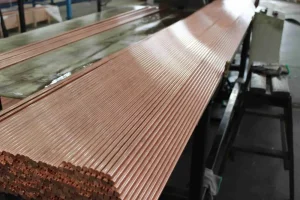
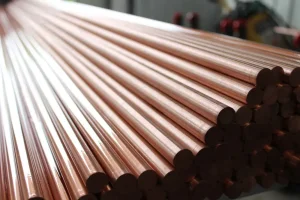
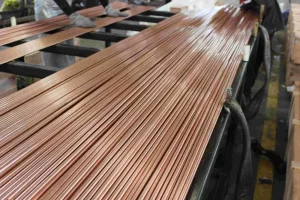
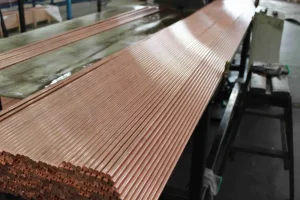
Oxygen-Free High Conductivity (OFHC) copper, commonly categorized as UNS C10100 and C10200, represents the absolute zenith of industrial copper refinement. Unlike standard electrolytic tough pitch (ETP) copper (which contains trace oxygen in the form of cuprous oxides), OFHC is cast through a highly controlled vacuum environment, or an atmosphere of carbon monoxide and nitrogen. This rigorous metallurgy ensures that the absolute oxygen content remains below 0.001% (10 ppm).
This virtual elimination of oxygen molecules shields the metal matrix from the lethal phenomenon of hydrogen embrittlement. When standard ETP copper is exposed to hydrogen gas at temperatures exceeding 400°C, the hydrogen diffuses into the solid metal, reacting with internal cuprous oxides to produce high-pressure water vapor. This leads to intergranular cracking, ruining structural resilience. OFHC copper remains completely immune to this decay, which makes it the de facto raw material for high-temperature and high-vacuum processing.
The rapid maturation of technologies like Artificial Intelligence (AI) hardware platforms, Electric Vehicles (EV), high-power industrial lasers, and next-generation telecommunications is driving global demand for ultra-pure OFHC wires. In the automotive sector, high-voltage vehicle architectures are transitioning toward 800-volt systems. At these extreme electrical potentials, any minor impurity or oxide void in the winding wire can result in corona discharges, premature dielectric breakdowns, and elevated resistive heating (I²R losses). Similarly, in high-frequency signal systems and aerospace sensor networks, the skin effect concentrates current flow on the wire's surface layer. Surface oxidation in copper wires severely distorts high-frequency signals. Using OFHC wire guarantees a clean transmission pathway, high electrical conductivity of up to 101% IACS (International Annealed Copper Standard), and superior thermal conductivity.
Industrial procurement managers looking for wholesale OFHC copper wires must navigate complex quality matrices. B2B purchasers must verify mechanical properties beyond basic nominal dimensions:
A global leader in high-conductivity, high-strength special copper alloys.
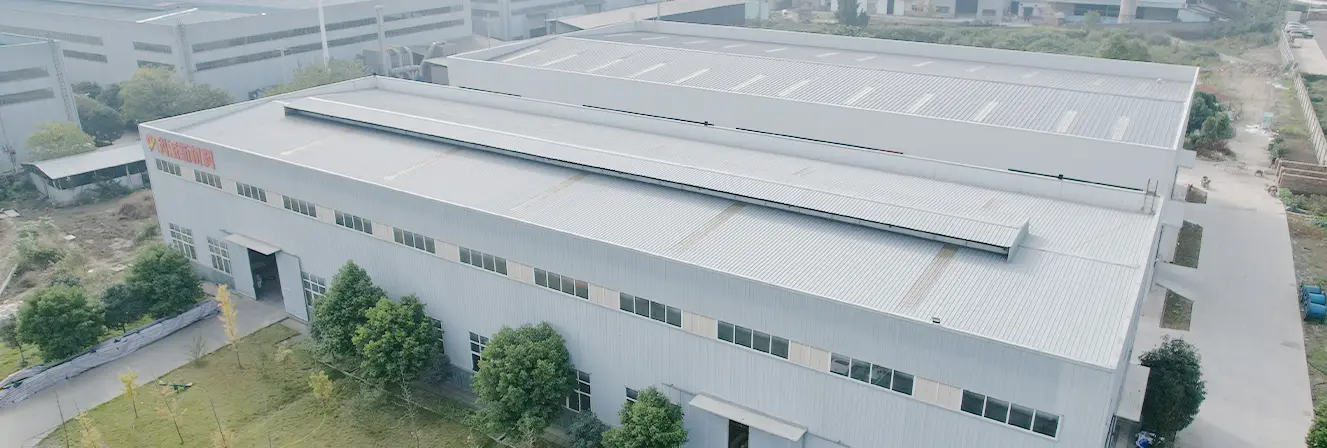
Established in May 2017, Sichuan Kepai New Materials Co., Ltd. is a high-tech private enterprise focused entirely on the R&D, advanced fabrication, and global distribution of high-conductivity, high-strength free-cutting tellurium copper, oxygen-free copper, and other premium copper alloys.
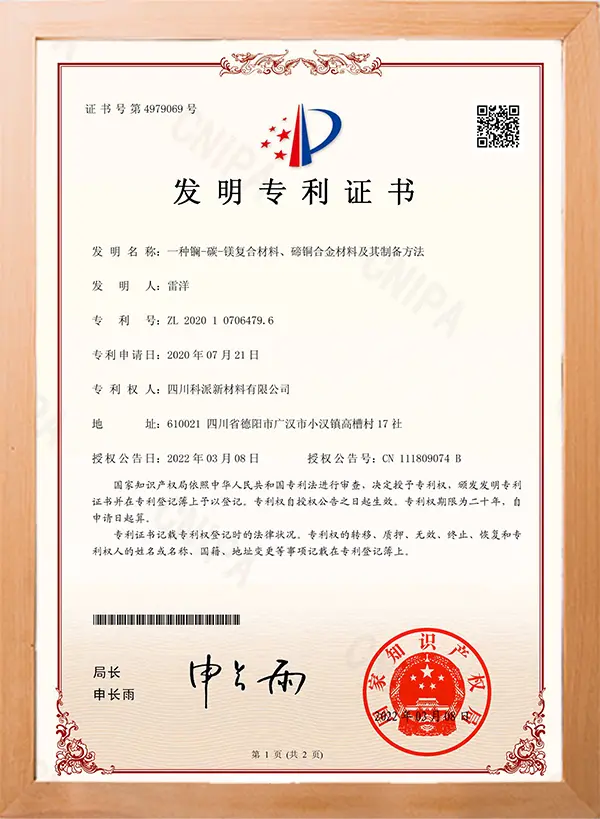
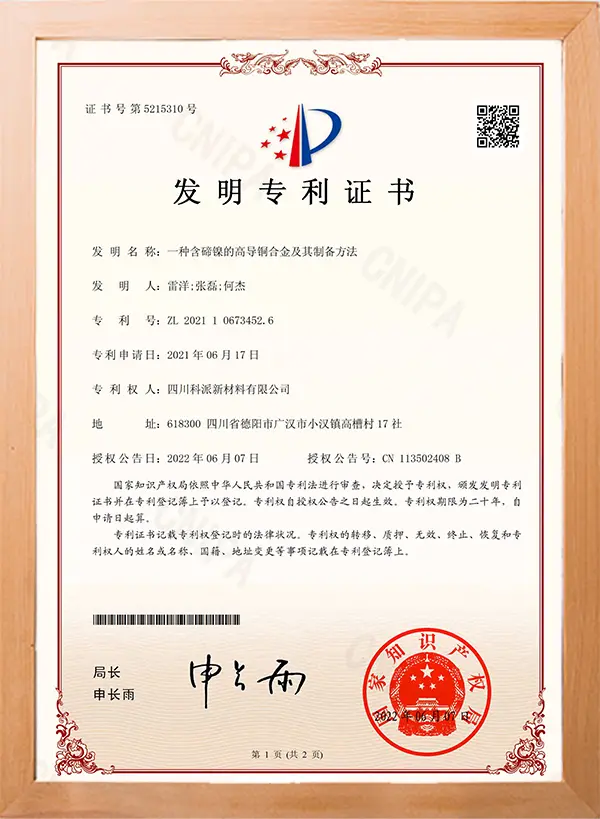
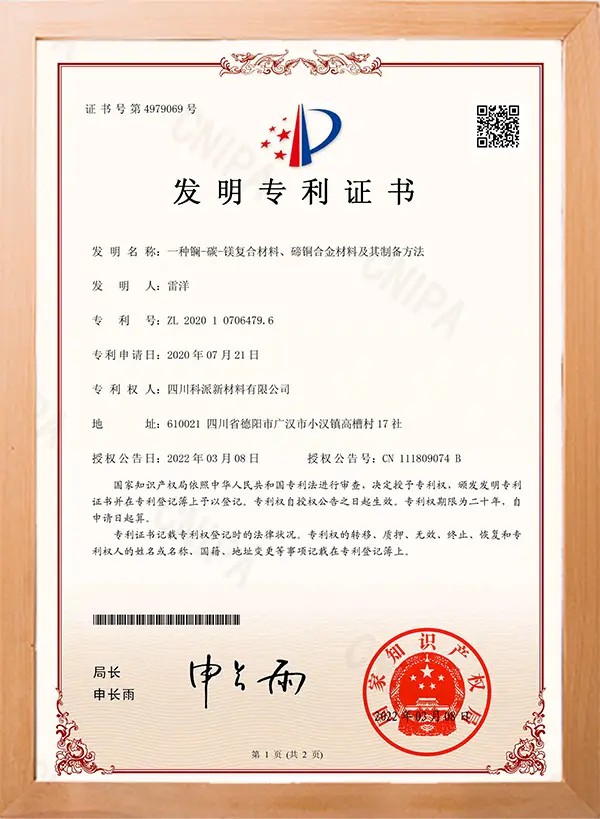
Operating from a sprawling 29,000 square meter state-of-the-art facility, Kepai supports some of the most demanding industries worldwide, including aerospace, electric vehicles, medical devices, high-speed rail, and precision CNC components. Driven by a commitment to quality and technical innovation, we have rapidly grown to serve over 1,000 global clients and secured more than 30 national patents.
Kepai represents the vanguard of the Chinese **Factory 4.0** transition. By integrating automated continuous upward casting systems with closed-loop computerized atmosphere control, we achieve absolute repeatability in copper purity. Our vertically integrated supply chain enables seamless processing from high-grade raw copper cathodes to precision-drawn wires, plates, and tubes.
This rigorous process automation drastically reduces human error, limits micro-impurity exposure, and maximizes raw material yield. In today's volatile supply environment, Kepai offers unbeatable lead times, strategic geographical logistics, and competitive price structures, ensuring unmatched supply chain resilience for international buyers.



Analyze our diverse portfolio of engineered copper alloys designed to meet specific electrical, thermal, and mechanical criteria.
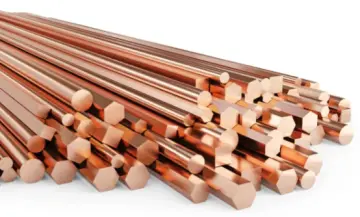
C19160 (CuNiSiCr) is a precipitation-hardened copper alloy optimized for structural connectors. It delivers superior mechanical strength, excellent electrical conductivity, and high resistance to thermal softening under stress.
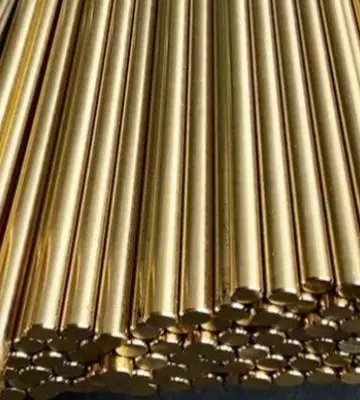
Widely recognized for its exceptional combination of high ductility and structural durability. It is the premier engineering material for highly detailed stamping, drawing, and complex forming.
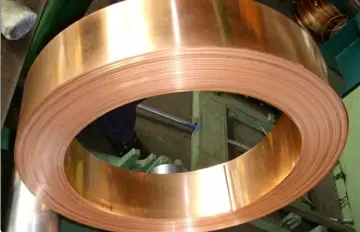
An elastic, high-conductivity copper-tin-phosphorus alloy offering fantastic fatigue limits, incredible corrosion resistance, and superb resistance to mechanical wear.
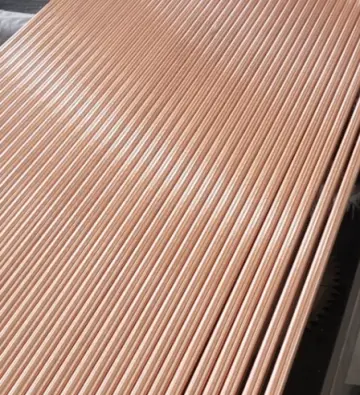
An extremely balanced copper alloy that maintains the elastic performance of traditional phosphor bronze while integrating excellent machinability for bulk bearing and gear production.
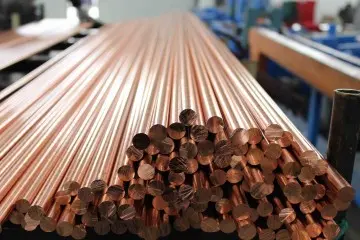
Trace-leaded precipitation hardened beryllium copper that offers unmatched structural hardness, tensile strength, and reliable electrical conductivity for demanding sensor architectures.
Ultra-thin, highly elastic copper alloy foil used in premium micro-switches, high-reliability spring diaphragms, and precision instrumentation applications.
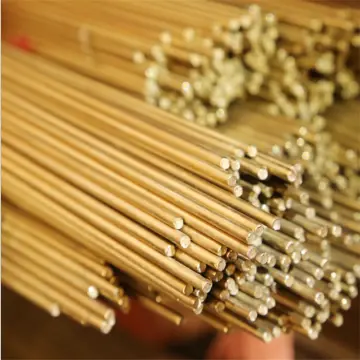
Widely recognized for its exceptional 100% machinability rating. Ideal for the high-speed production of detailed mechanical connectors, threaded parts, and hydraulic components.
Highly refined electrolytic copper foil with phenomenal heat transfer capabilities and high electrical conduction efficiency, ideal for battery shielding systems.
An ultra-high-purity copper tube containing less than 10 ppm oxygen, critical for high-vacuum electronic components and wave guide arrays.
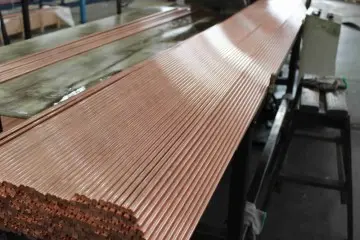
A flagship Kepai innovation combining oxygen-free purity (low risk of embrittlement) with trace tellurium addition for outstanding machinability and electrical conductivity.
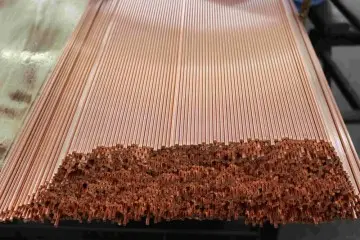
Highly standardized electrolytic tough-pitch copper featuring reliable physical structure and great ductility, suited for standard electrical transmission grounding.

Delivers the highest structural hardness and tensile strength values (reaching 1400 MPa) of any industrial copper alloy, while retaining good thermal dissipation.
Where Kepai precision copper alloys serve as structural backbones under extreme operating conditions.

Thanks to its outstanding anti-bacterial qualities, biocompatibility, and magnetic neutrality, OFHC copper is highly demanded in MRI scanners and sensitive medical electronics.
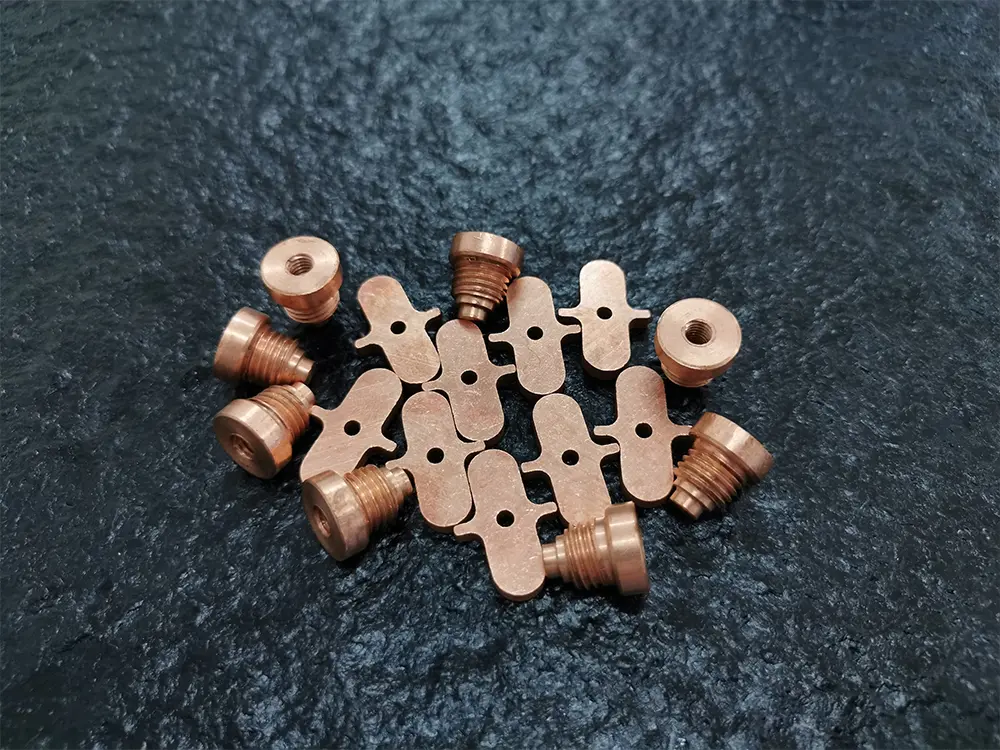
With unmatched electrical efficiency and thermal performance, OFHC is critical in EV batteries, high-voltage wiring harnesses, and EV charging connectors.

OFHC is ideal for critical aerospace applications, particularly in generators, secure military-grade communications, and telemetry wire harnesses.

Excellent natural resistance to bio-fouling and saltwater corrosion makes Kepai specialty alloys the ideal structural choice for subsea sensors and offshore structures.
A rigorous commitment to materials science, precision engineering, and global quality control frameworks.

Sichuan Kepai New Materials operates on the core belief that technical innovation fuels industrial progression. Equipped with some of the industry's most advanced testing rigs, and staffed by leading metallurgists, Kepai actively develops unique specialty copper compounds that push the boundaries of electrical and mechanical performance.
Our core focus centers on balancing traditionally conflicting attributes: enabling **extraordinary machinability** without compromising the structural integrity, electrical output, or temperature resistance of the copper alloy.

Our dedicated metallurgical laboratory develops custom alloys tailored to our clients' precise conductivity, strength, and processing requirements.

Developed proprietary Oxygen-Free Tellurium Copper, providing the electronic connector sector with a high-machinability material that carries no risk of hydrogen embrittlement.

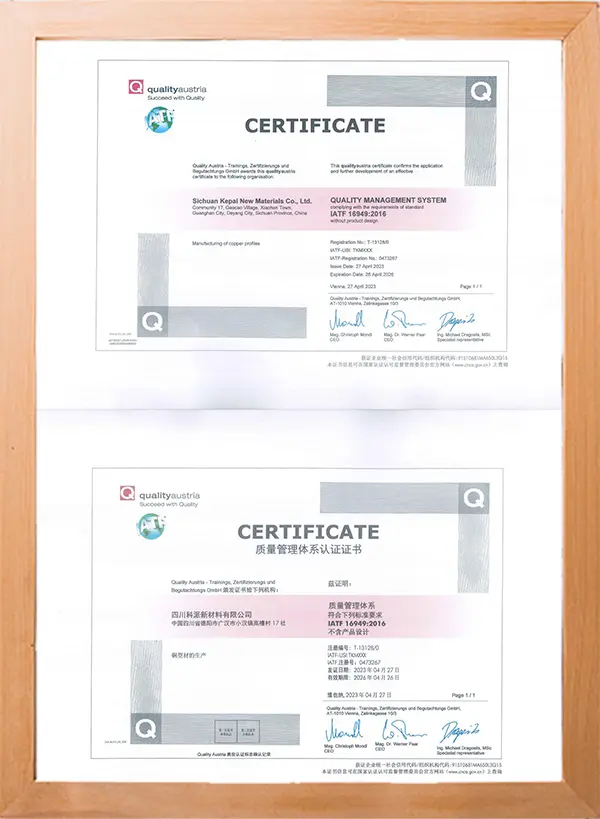
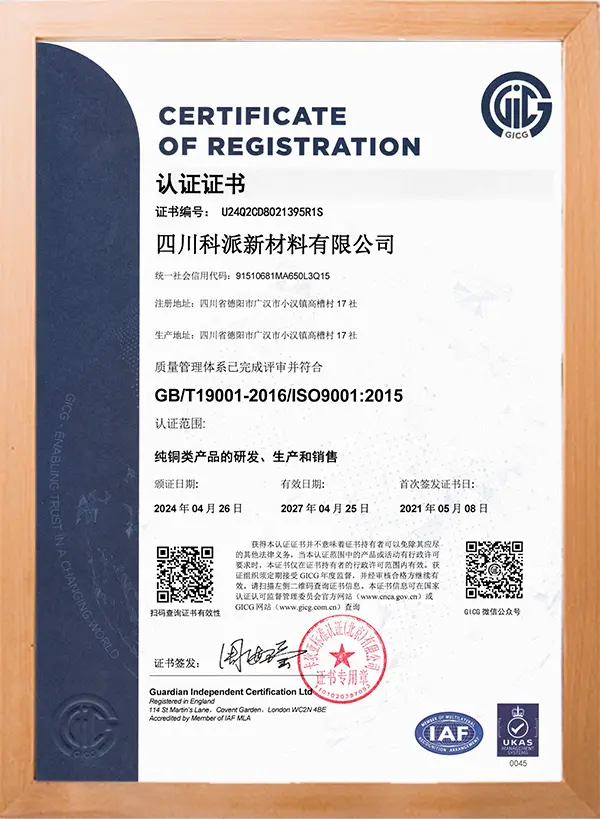
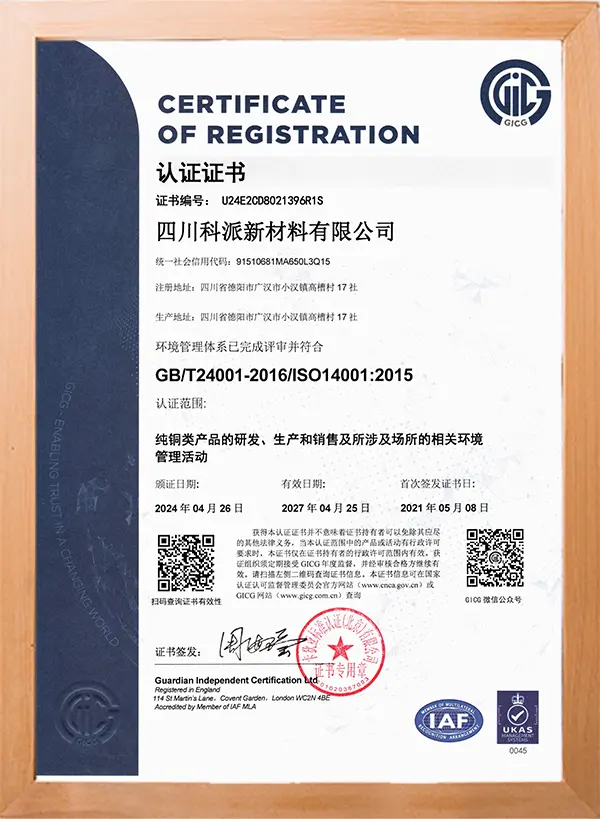
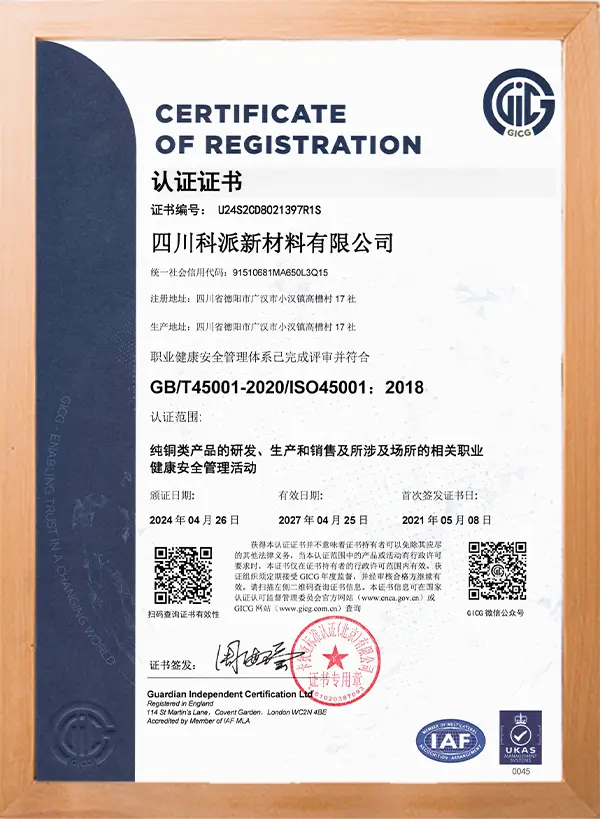
Our production facility is certified to ISO9001:2015, ISO14001:2015, and OHSAS 45001:2018 (now ISO 45001), ensuring strict quality control and safety standards.

Kepai regularly participates in establishing Chinese national and regional copper alloy manufacturing standards, solidifying our role as a trusted technical authority.

By optimizing raw material consumption and minimizing chemical waste, we offer eco-friendly, green products aligned with global sustainability initiatives.
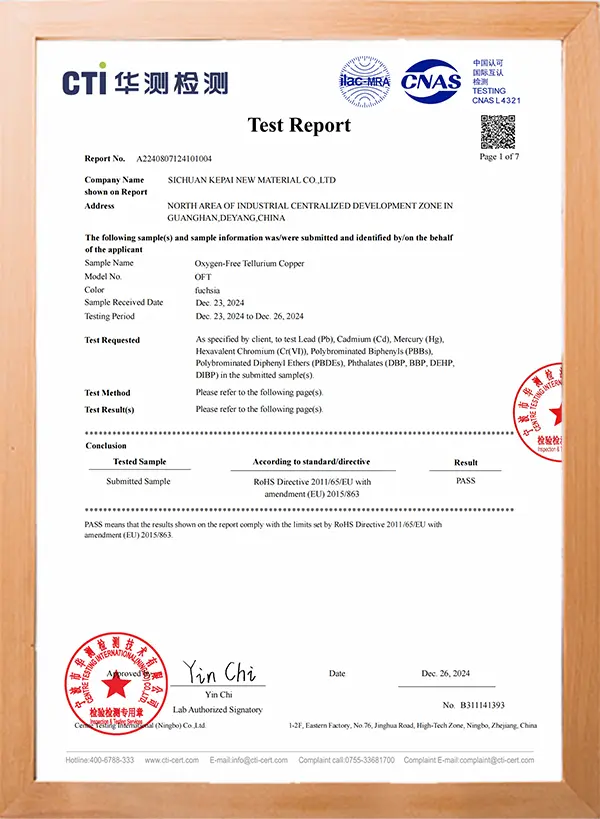
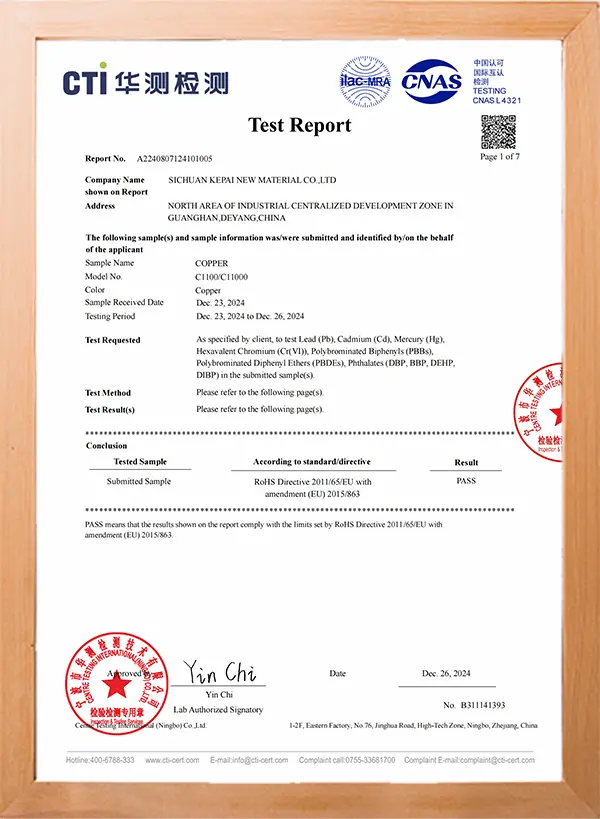
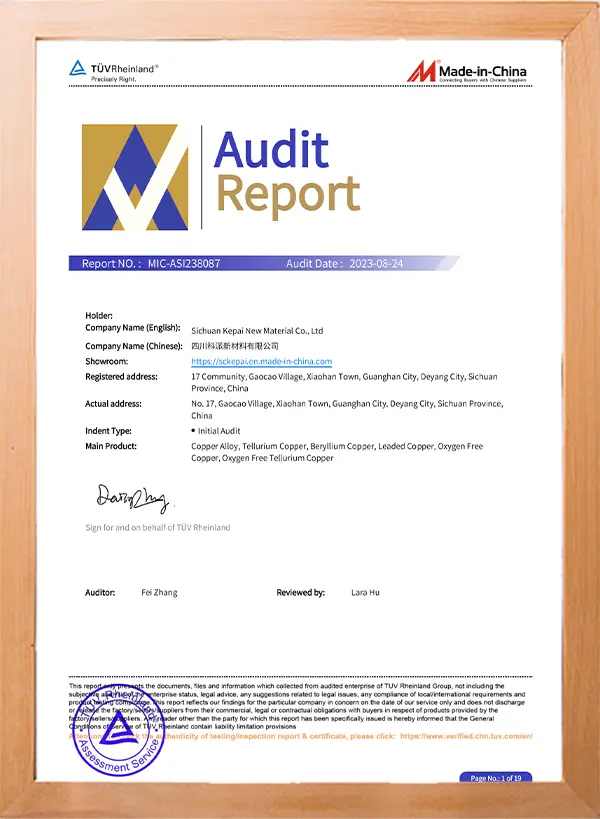
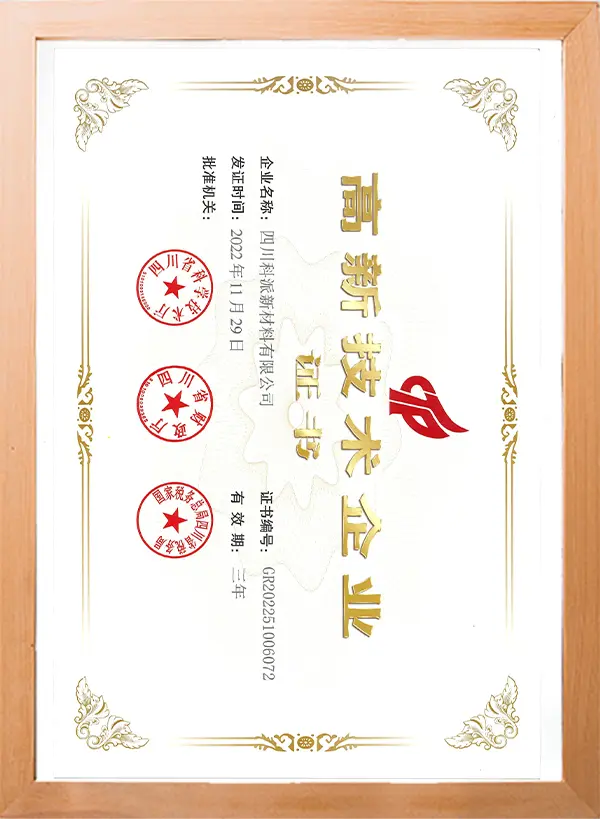
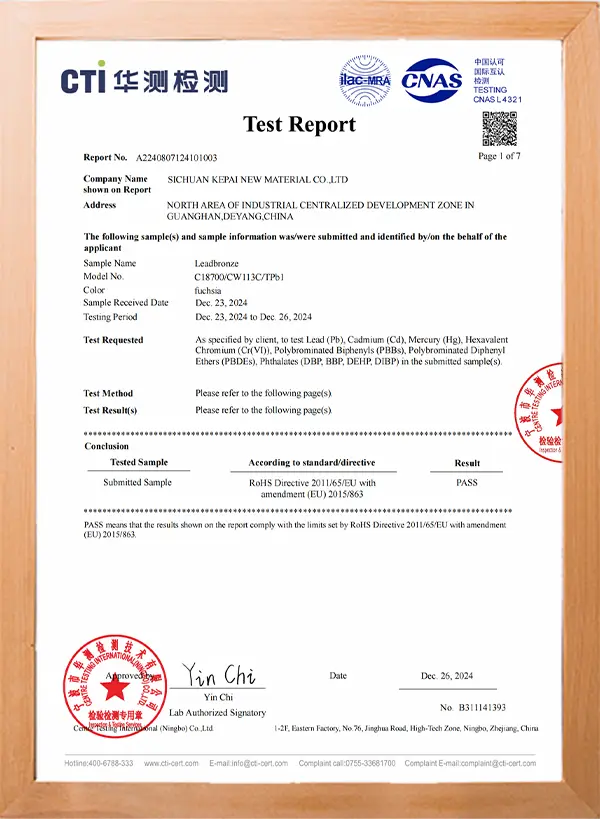
Our premium products are trusted across major industrial markets worldwide, backed by rigorous compliance certifications.
In addition to securing a major share of China's domestic copper alloy market, Sichuan Kepai is a trusted supplier to international clients across North America, the European Union, South Korea, and Southeast Asia.
Our international compliance certifications serve as a testament to our quality, guaranteeing that every delivery meets strict global requirements for mechanical reliability and chemical purity.

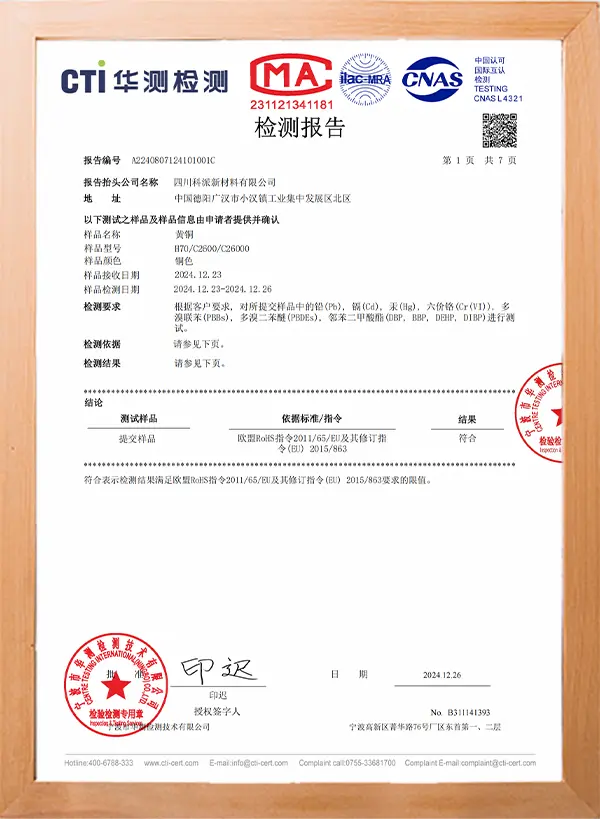
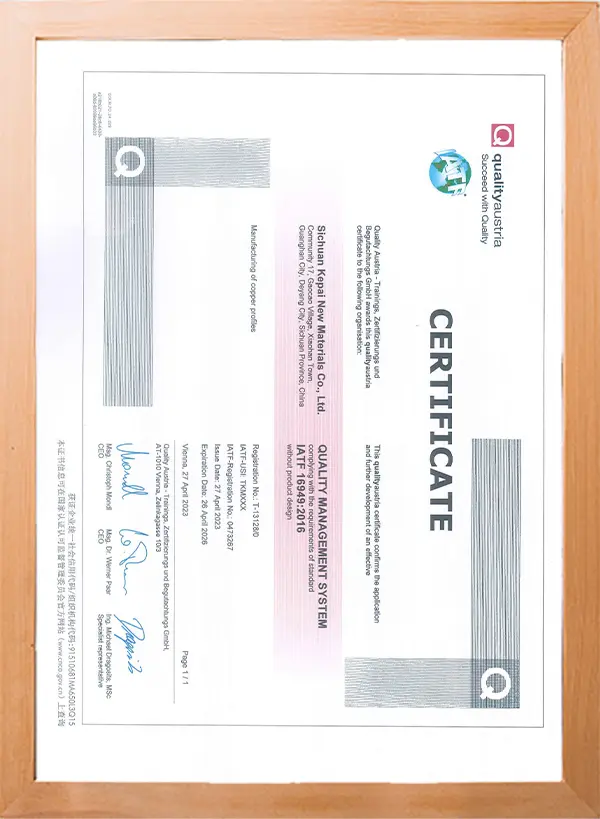
Detailed technical answers addressing core chemical, mechanical, and logistical questions from global procurement officers.
The difference lies in their purity levels and allowed impurity limits. **UNS C10100** (Oxygen-Free Electronic) requires a minimum copper purity of **99.99%** with an oxygen content of less than 5 ppm, and limits trace impurities (such as lead, sulfur, and bismuth) to extremely low parts-per-million. **UNS C10200** (Oxygen-Free) requires a minimum copper purity of **99.95%** and limits oxygen to under 10 ppm. C10100 is typically specified for ultra-high-vacuum systems, superconductor stabilizers, and advanced semiconductor components, whereas C10200 serves standard electronics and winding applications.
When copper containing cuprous oxides (like ETP copper) is heated in a hydrogen-rich atmosphere, hydrogen gas diffuses into the metal and reacts with the oxygen to form water vapor (steam). Because steam molecules are too large to escape the grain boundaries, they generate massive internal pressure, causing micro-voids and cracking. Because **OFHC copper** has an oxygen content below 10 ppm, there are virtually no cuprous oxides present to react with diffusing hydrogen, making the alloy completely immune to hydrogen embrittlement during high-temperature annealing or brazing.
Standard pure copper is highly ductile and sticky, causing it to build up on cutting tools and produce long, stringy chips that can clog CNC machinery. By introducing precise, uniformly distributed tellurium micro-particles, we create a dispersion that acts as a natural chip breaker and lubricant. This improves the **Machinability Rating to 85%** (compared to only 20% for pure copper), enabling significantly faster spindle speeds, reducing tool wear, and yielding exceptional surface finishes.
For high-speed automated winding, you must specify the **temper** (annealed vs. hard-drawn), **tensile strength** (typically 220–380 MPa depending on diameter), **elongation at break** (ensuring adequate ductility to prevent snapping under tension), and strict **dimensional tolerances** (usually to ±0.005mm). Consistent recrystallization temperatures and uniform grain size distributions are also key to ensuring stable mechanical performance.
Every wholesale shipment from Sichuan Kepai includes a comprehensive **Material Test Report (MTR)** containing chemical composition analysis (via ICP-AES/OES), IACS electrical conductivity measurements, tensile strength and elongation data, and certification of compliance with standards such as ASTM B170 or DIN EN 13604. Upon request, we also provide RoHS/REACH declarations and hydrogen embrittlement testing verification.
Explore our specialized high-performance copper grades, designed for challenging industrial and manufacturing environments.
Partner with Sichuan Kepai New Materials Co., Ltd. for reliable, high-purity wholesale OFHC copper wires and custom copper alloy solutions. Our technical engineering team is ready to assist with alloy selection, mechanical specifications, and volume pricing.
Send Business Inquiry Kepai New Material