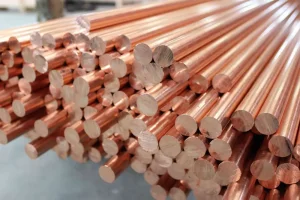
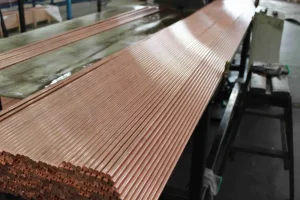
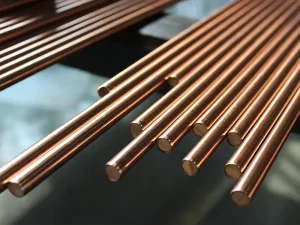
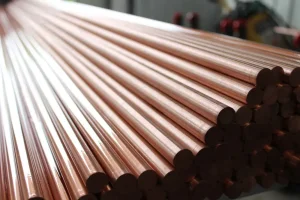
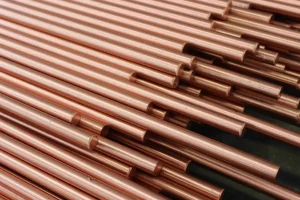
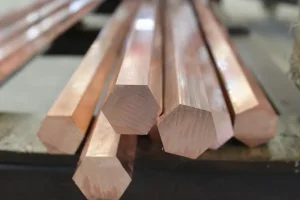
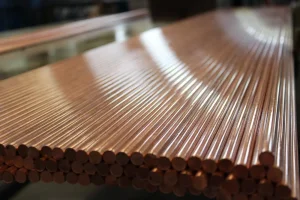
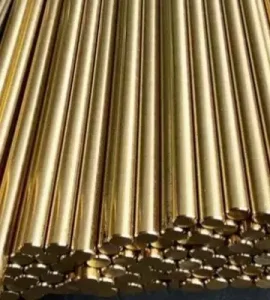
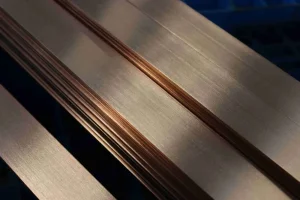
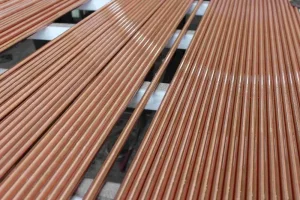
Oxygen-Free High-Conductivity (OFHC) copper is the pinnacle of metallurgical purity in copper manufacturing. Categorized primarily under the Unified Numbering System as UNS C10100 (OFE - Oxygen-Free Electronic) and UNS C10200 (OF - Oxygen-Free), this material is processed under strictly controlled, oxygen-free reducing atmospheres to prevent any oxidation of the copper matrix during melting and casting. The primary differentiator of OFHC copper is its extremely low oxygen concentration—typically limited to less than 10 ppm (0.001%) for C10100, resulting in a minimum copper purity of 99.99%.
Unlike standard copper grades such as ETP (Electrolytic Tough Pitch - UNS C11000), which contains substantial copper oxides (typically 200 to 600 ppm oxygen), OFHC copper is immune to hydrogen embrittlement. When exposed to reducing gases (such as hydrogen) at elevated temperatures, standard ETP copper suffers from localized chemical reactions where hydrogen diffuses into the metal, reacts with cuprous oxides (Cu₂O), and forms high-pressure water vapor. This vapor creates micro-voids and deep structural cracking along grain boundaries, leading to catastrophic physical failure. OFHC copper's absence of copper-oxygen phases prevents this phenomenon, rendering it indispensable for high-vacuum, high-temperature, and glass-to-metal sealing applications.
The demand for high-purity oxygen-free copper sheets is accelerating at an unprecedented pace, driven by structural shifts in global technology infrastructure. Advanced electronics manufacturing, cryogenic physics research, and high-voltage power transmission architectures demand reliable raw materials. The rise of 5G/6G RF infrastructure, micro-semiconductor packaging, and high-frequency microwave tubes has placed OFHC copper sheets at the core of international supply chain strategies.
Industrial consumers look past commodity pricing, prioritizing absolute chemical purity, strict dimensional thickness tolerances, and structural consistency. The global transition toward electric vehicles (EVs) has further intensified the consumption of premium copper grades. High-power DC fast-charging connector terminals, battery busbars, and traction motor windings necessitate the mechanical ductibility and thermal dissipation characteristics that only premium OFHC and specialized tellurium-copper alloys can provide. This dynamic has driven global sourcing directors to seek integrated manufacturers capable of delivering certified, traced, and high-yield copper sheets.
Utilized in structural components for satellites, aerospace avionics cooling, vacuum tubes, and high-energy particle accelerator waveguides requiring absolute outgassing prevention.
Indispensable for heavy-duty battery busbars, power distribution blocks, dynamic heat sinks, and thermal management systems in hybrid and electric drivetrains.
Critical in high-power transmitters, magnetrons, and klystrons, where hydrogen-free material guarantees absolute system stability under high-voltage fields.
Sourcing of copper sheets is heavily influenced by localized industrial ecosystems and specialized engineering requirements across different economic zones. For instance, in the North American Aerospace and Defense hub, OFHC copper sheets must rigidly align with military specifications (MIL-SPEC) and strict ASTM standards (e.g., ASTM B170 Grade 1 for electronic applications). The critical metric here is absolute vacuum-tightness, where engineers fabricate heavy thermal ground planes for satellites and radar waveguide systems.
In contrast, the European Semiconductor & Smart Grid market prioritizes environmental compliance (RoHS, REACH) alongside extreme structural purity for high-precision CNC manufacturing. Specialized medical engineering, such as MRI magnetic coils and diagnostic imaging components, relies on localized stocks of copper sheets with certified isotopic profiles. In the rapid-growth Asia-Pacific Industrial Belt, the focus shifts toward localized sheet dimensions with optimized stamping and forming properties to fuel high-speed manufacturing of consumer electronics, automotive leadframes, and photovoltaic power connectors. By providing precise thickness profiles and chemical consistency, Kepai meets these diverse regional manufacturing workflows with customized industrial copper solutions.
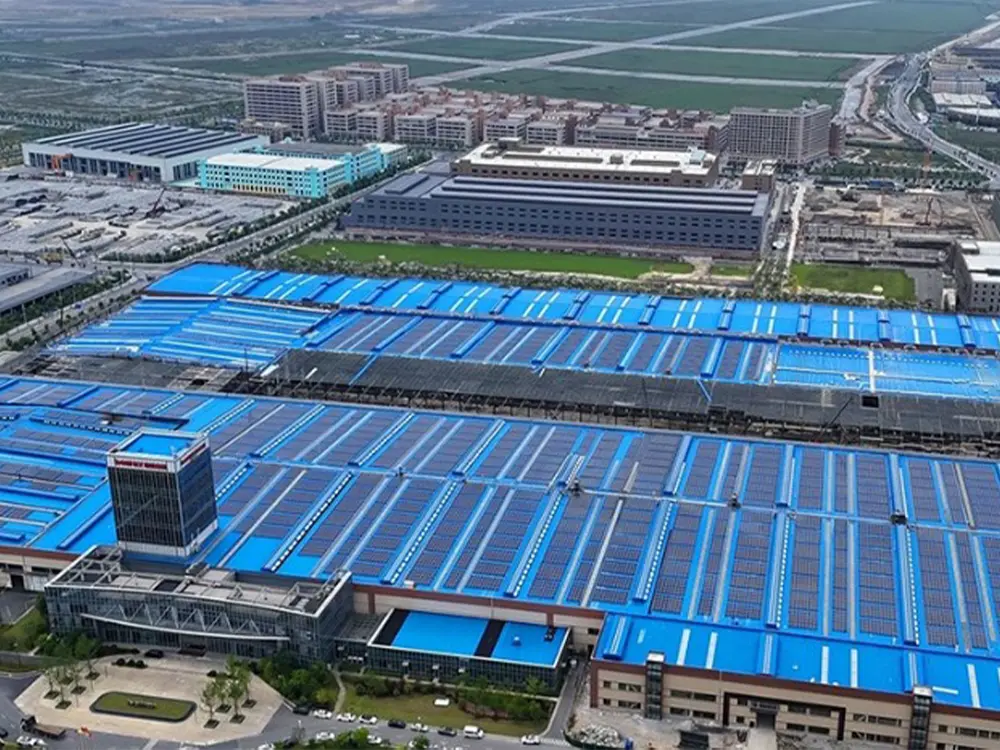
Operating out of China's advanced manufacturing hubs, Sichuan Kepai leverages vertical manufacturing integration to bypass traditional supply chain vulnerabilities. From initial vacuum induction melting (VIM) and continuous casting to multi-pass cold rolling and precision annealing, every step of the copper sheet processing cycle is completed under one roof.
This unified workflow translates to substantial lead-time advantages, strict control over trace metallic impurities, and highly competitive pricing models. In a global trade environment marked by shipping volatility and raw material fluctuations, Kepai’s domestic raw material security and high manufacturing capacity guarantee uninterrupted material delivery to manufacturing hubs in North America, Western Europe, and East Asia.
As advanced electronic devices become more compact and operate at higher energy densities, the technical requirements for conductive copper sheets are undergoing a quiet revolution. Traditional high-purity copper is highly effective, yet it faces mechanical limits in extreme stress environments. Under high temperatures, pure copper undergoes recrystallization, resulting in a dramatic drop in tensile strength. The future of copper sheet technology relies on advanced micro-alloying techniques.
Sichuan Kepai is at the forefront of this technical shift, engineering proprietary alloys such as oxygen-free tellurium copper (OFT) and specialized sulfur-treated copper. These alloys are specifically formulated to introduce high-speed machinability while preserving an electrical conductivity rating of over 98% IACS. Our R&D team is continually pushing the boundaries of metallurgical performance: refining grain structure controls, developing custom oxygen-free copper matrices with trace zirconium and chromium reinforcements, and pioneering advanced cladding technologies. This research ensures that tomorrow's ultra-high vacuum equipment, high-speed rail systems, and quantum computers are powered by materials that deliver both exceptional strength and excellent conductivity.

High-purity copper exhibits natural antimicrobial properties and extreme structural consistency, supporting high-vacuum medical imaging chambers and precision medical tooling.
Maximizes battery pack efficiency and charging rate capabilities through low-resistance busbars and thermal cooling channels made from premium OFHC plates.

Ideal for aerospace electrical networks, precision flight electronics casing, heat-shield ground planes, and high-frequency communication waveguides.

Offers excellent resistance to marine biological fouling and seawater corrosion, making it perfect for marine thermal exchangers and offshore instrumentation.
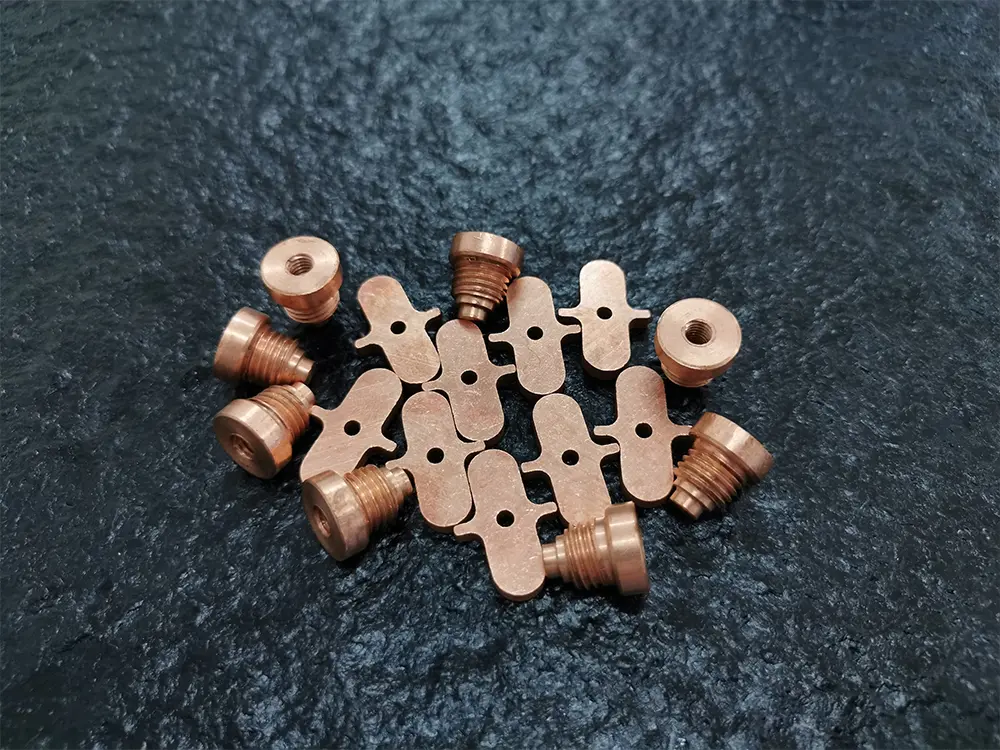
Our oxygen-free tellurium copper grades serve as the premium standard for plasma cutting electrodes and nozzle caps, multiplying tool lifetime and output stability.
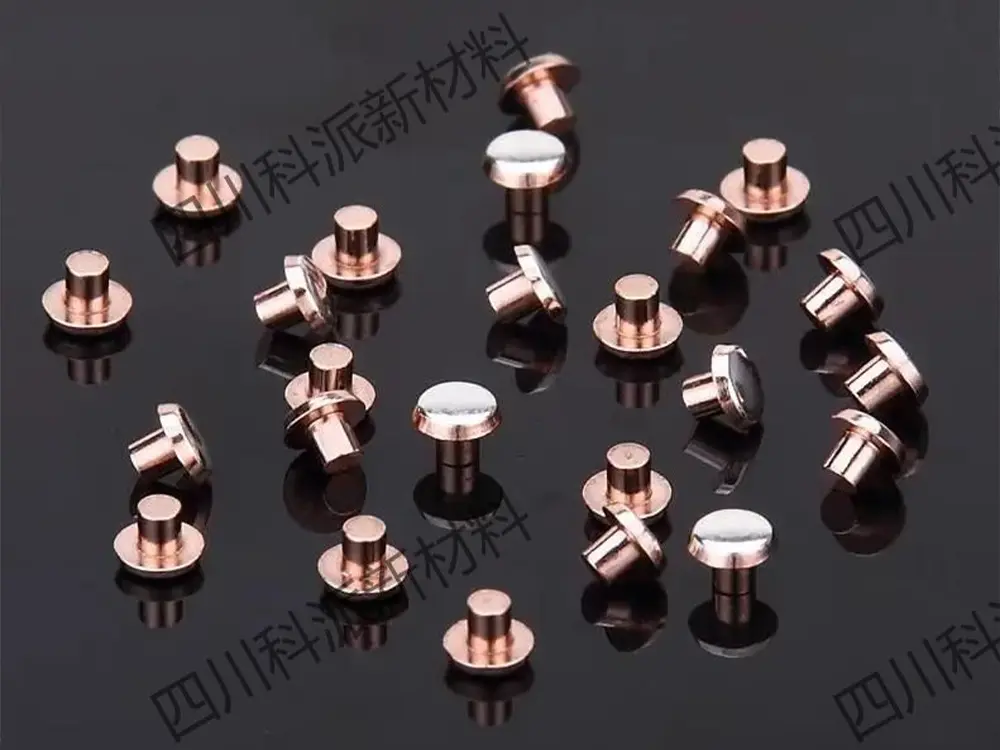
Ensures high conductivity, low heat generation, and solid mechanical connections within utility-scale solar inverter systems and stationary batteries.
Sourcing advanced alloys internationally requires solid compliance and localized customer support. For engineers and sourcing directors, compliance is not just about checkmarks; it's a vital operational risk mitigation factor. Our high-conductivity copper sheets strictly adhere to major global standards, including ASTM B152, ASTM B170 (for Oxygen-Free grades), and European norms EN 13599 and EN 13601. This precise alignment with international standards guarantees that the physical, chemical, and electrical properties of our sheets remain identical, regardless of the destination assembly plant.
Sichuan Kepai backs every shipment with rigorous quality documentation, including comprehensive Mill Test Certificates (MTC) to EN 10204 3.1 standards, detailed chemical analysis via spark emission spectrometry, and ultrasonic testing to identify internal void defects. In addition, our manufacturing lines fully conform to RoHS, REACH, and California Proposition 65 directives. This means our global customers can easily integrate our materials into environmentally conscious markets like North America and the European Union, avoiding customs friction and liability issues. With local technical sales support, Kepai helps clients resolve complex design, thickness, and machining challenges, ensuring seamless integration into production workflows.
OFHC (Oxygen-Free High-Conductivity) copper (UNS C10100/C10200) contains less than 10 ppm (0.001%) oxygen, while ETP (Electrolytic Tough Pitch) copper (UNS C11000) typically contains 200 to 600 ppm of oxygen in the form of cuprous oxide. Because of this purity, OFHC copper is immune to hydrogen embrittlement, has higher ductility, exhibits better weldability, and features superior performance in high-vacuum environments.
At temperatures above 400°C, hydrogen molecules can diffuse into oxygen-bearing copper (like ETP), reacting with the internal copper oxide phases (Cu₂O) to create pressurized water vapor (H₂O). This high vapor pressure causes internal blistering and microscopic fractures along grain boundaries, leading to sudden mechanical failure. OFHC copper prevents this process because it does not contain the oxide phases necessary to react with hydrogen.
We manufacture copper sheets in standard thicknesses ranging from 0.1 mm foil up to heavy 100 mm structural plates. Our modern rolling mills achieve strict thickness tolerances in line with ASTM B248 and EN 13599 standards. Customized widths up to 1000 mm and lengths up to 3000 mm are available upon request, subject to specific grade thickness requirements.
Traditional copper is ductile and challenging to machine, creating long stringy chips that wrap around tooling. OFT copper is micro-alloyed with trace tellurium (0.4% - 0.7%), which forms tiny, finely dispersed copper telluride particles within the copper matrix. These particles act as natural chip breakers during high-speed machining, raising the machinability index to 85% while keeping electrical conductivity at ≥98% IACS.
All deliveries from our facility are accompanied by complete Mill Test Certificates (MTC) according to EN 10204 3.1. These documents verify our product's chemical purity, mechanical strength, and electrical conductivity properties. Our manufacturing processes also conform to ISO 9001, ISO 14001, and ISO 45001 standards, ensuring full compliance and material traceability for our global buyers.
Partner with Sichuan Kepai for reliable material properties, responsive supply chains, and extensive technical support. Contact us today to request sample sheets or technical consulting.
Send Technical Sourcing Inquiry Kepai New Material