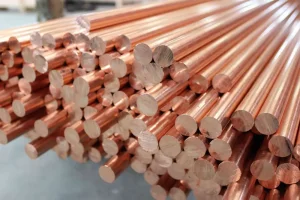
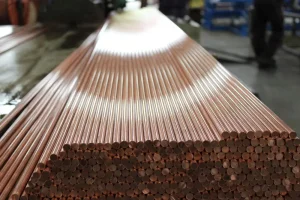
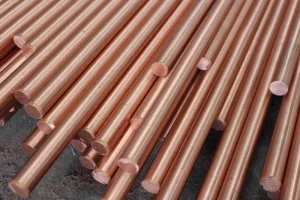
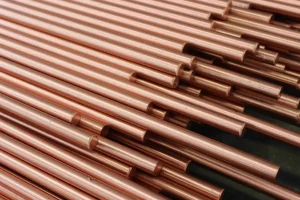
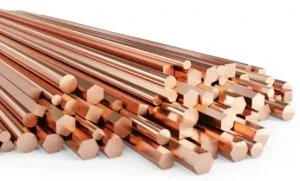
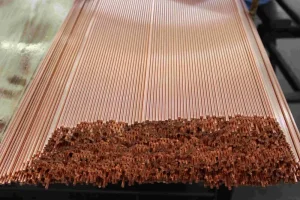
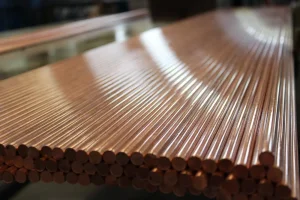
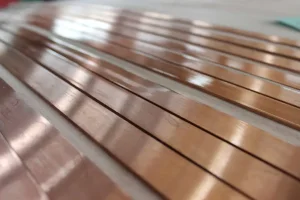
Direct sourcing from certified high-conductivity advanced copper manufacturing units
Aligning advanced metallurgical science with shifting international environmental frameworks
Strict global environmental policies, including the European Union's RoHS Directive (Restriction of Hazardous Substances), REACH Regulation, and North America's NSF/ANSI Standard 372, are rapidly phasing out leaded copper alloys in electronic component systems, potable water installations, and high-performance automotive connectors. Industrial operations must transition to reliable lead-free alternatives without compromising mechanical output.
Traditional leaded brass (such as C36000) achieves excellent machinability because lead acts as a natural microscopic lubricant and chip breaker. Completely removing lead often induces extreme tool wear, poor surface finishes, and reduced electrical conductivity. The engineering challenge is maintaining a high Machinability Index (80%+) while retaining superior heat dissipation properties.
Sichuan Kepai New Materials Co., Ltd. addresses these systemic limitations through advanced micro-alloying engineering. By replacing toxic lead with precisely structured micro-alloys, such as Tellurium (Te) in C14500 Tellurium Copper or Sulfur (S) in C14700 Sulfur Copper, we achieve chip-breaking properties analogous to leaded materials while preserving over 93% to 98% IACS conductivity.
Addressing the Supply Chain Matrix: Transitioning industrial operations from legacy alloys to ecological alternatives requires strong support structures. Sichuan Kepai New Materials provides the raw manufacturing base, comprehensive chemical verification profiles, and global logistical support to allow a smooth transition for high-precision CNC machining shops, massive electrical assembly operations, and specialized engineering firms worldwide.
A global leader in high-conductivity, high-strength free-cutting copper alloys
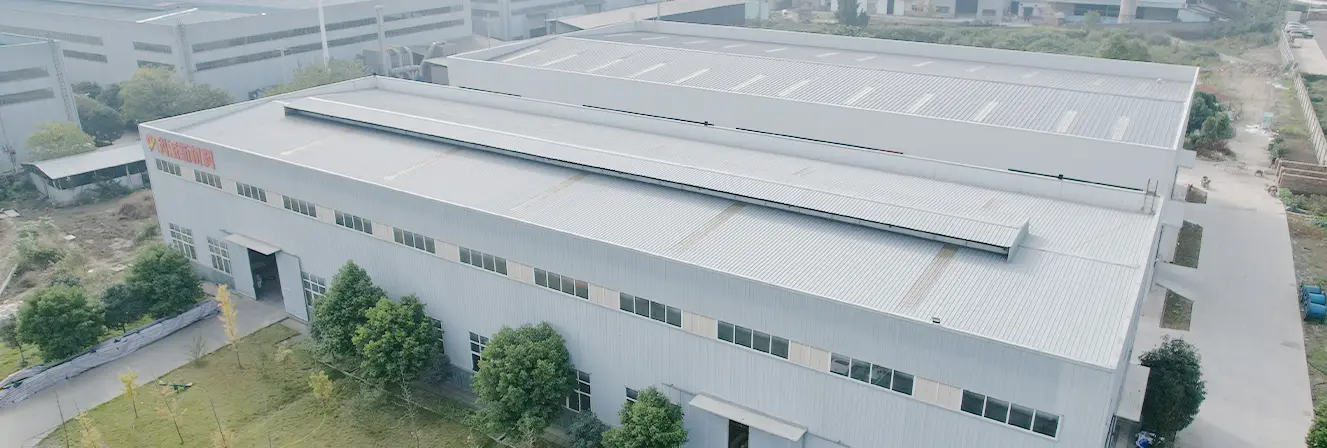
Established in May 2017, Sichuan Kepai New Materials Co., Ltd. is a high-tech private enterprise focused on the research, development, production, and worldwide sales of specialized copper alloys. Our capabilities center on the production of oxygen-free, high-conductivity, high-strength tellurium copper, sulfur copper, and high-elasticity beryllium copper alloys.
Equipped with high-vacuum induction melting furnaces, high-ratio extrusion lines, and precision cold drawing equipment, we maintain full control over the chemical composition and grain structures of our alloys to guarantee consistent structural integrity and physical performance for our customers.



In-depth look at our key alloy categories, material formulations, and standard specifications
Composition: Cu: 99.4%, Te: 0.4-0.7%, P: 0.004-0.012%
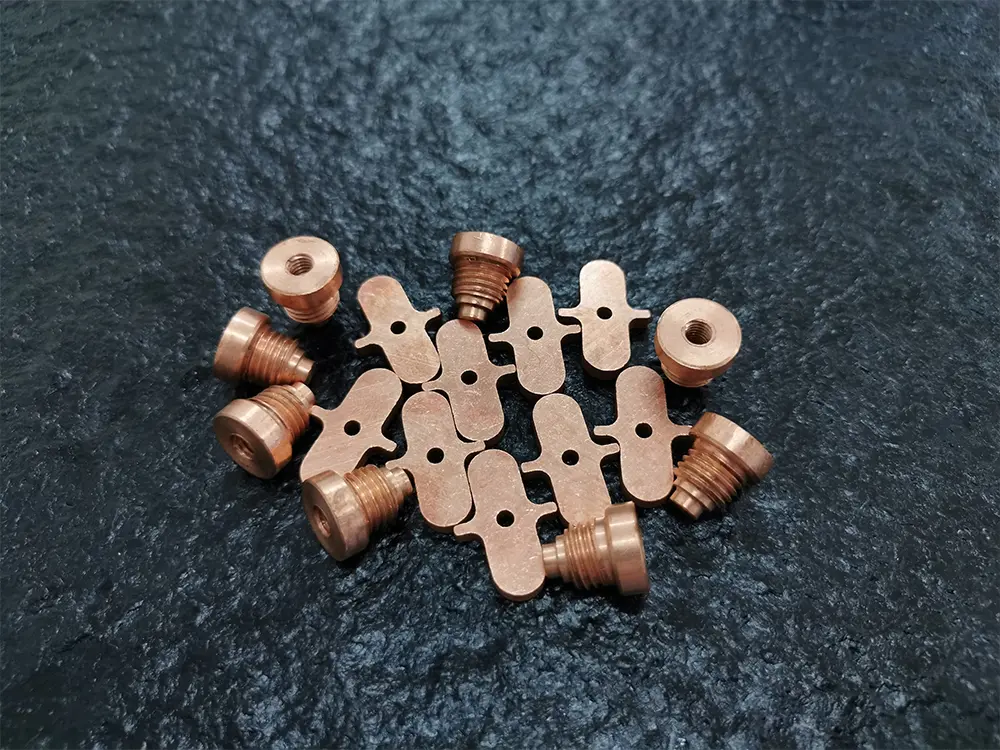
C14500 is a high-conductivity, free-cutting copper alloy developed to fill the gap between pure high-conductivity coppers and highly machinable leaded brasses. Incorporating trace tellurium produces fine cuprous telluride (Cu₂Te) inclusions, acting as an integrated chip breaker for smooth machining operations. The addition of trace phosphorus provides protection against hydrogen embrittlement during brazing processes.
Composition: Be: 1.8-2.0%, Co+Ni: 0.2% min, Cu: Bal.
As precipitation-hardening alloys, C17200 and C17300 yield the highest mechanical strengths of all copper alloys. Undergoing heat-aging causes sub-microscopic beryllium-rich phases to precipitate, boosting tensile strengths up to 1380 MPa. These materials are used for precision components requiring structural elasticity, resistance to fatigue, and electrical transmission capabilities.
Composition: Cu: 99.6%, S: 0.2-0.5%, P: 0.003%
C14700 provides an effective alternative when tellurium sourcing is constrained or cost-prohibitive. Introducing sulfur forms uniform cuprous sulfide (Cu₂S) particles, facilitating chip shearing with low friction. It maintains high electrical and thermal conductivity while enabling fast cutting speeds and long tool life during manufacturing processes.
Navigating changing geopolitical standards and the demand for clean, lead-free raw materials
The global copper market is undergoing a transition driven by public safety and environmental regulations. In North America, state-level regulations and federal clean water acts mandate lead-free components for potable water plumbing systems. In Europe, strict RoHS updates continue to limit exemptions for leaded bronze and brass, compelling automotive and electronics manufacturers to redesign components using lead-free alloys.
In the Asia-Pacific region, rapidly growing new-energy vehicle (NEV) production and expansion of smart grid infrastructures are driving demand for highly conductive materials. Traditional coppers struggle to meet the machining tolerances required for advanced components, while leaded alloys fail to meet export compliance standards, driving global demand for high-performance lead-free alternatives.
Industrial supply chain managers face the challenge of sourcing high-performance, compliant copper alloys with stable pricing and delivery schedules. In addition to meeting high quality standards, Kepai maintains production capacities designed to meet the demands of global manufacturers.
Where Kepai's lead-free and high-performance copper alloys drive efficiency and reliability
EV high-voltage connectors and fast-charging pins require high electrical conductivity and robust heat dissipation under elevated currents. Kepai's oxygen-free, high-conductivity tellurium copper alloys are designed to handle high energy transfers while preventing thermal runaway, helping vehicle engineers build lighter, more efficient charging systems.

Aerospace systems operate under extreme temperature gradients and mechanical stress. Our high-strength beryllium copper alloys provide structural stability, fatigue resistance, and reliable conductivity for vital instrumentation, generators, sensors, and secure data transmission modules.

Subsea environments require high resistance to biofouling and saltwater corrosion. Kepai's high-purity brass and bronze alloys are used in offshore drilling fittings, seawater pipelines, ship propulsion systems, and undersea optical fiber transponders due to their high corrosion resistance.

High-precision imaging hardware, MRI electromagnets, and high-frequency surgical devices require copper components with minimal magnetic interference and high mechanical integrity. Our oxygen-free copper provides clean transmission signals for sensitive diagnostic instrumentation.
Plasma torches generate extreme heat, requiring electrodes and nozzles made of highly thermally conductive alloys, such as Kepai Tellurium Copper, to prevent premature wear. Additionally, high-capacity energy storage systems rely on our busbars to maintain low contact resistance, reducing system energy losses.
Investing in next-generation metallurgical research, green processing, and carbon-neutral production
At Sichuan Kepai New Materials Co., Ltd., we align our technological development with global clean energy transition goals. Future metallurgical manufacturing will prioritize sustainable extraction, refined melting techniques, and near-zero carbon emission profiles.
Our current technological roadmap focuses on integrating advanced thermal recycling technologies, reducing our carbon footprint across production lines, and optimizing manufacturing efficiency. These clean processing practices help global partners meet their scope-three supply chain carbon reduction goals.
Achieving 99% scrap alloy recycling efficiency while maintaining high chemical purity, alongside developing new lead-free alternatives that reach 98%+ IACS conductivity with a 90%+ Machinability Index.
Our engineers are developing advanced material designs to meet emerging industrial requirements:
Maintaining strict, audit-ready compliance pathways and comprehensive analytical validation
Our quality management systems are designed to guarantee high quality and consistency across our entire product range, with strict tracking and control protocols governing every step from raw materials to final shipment.
We operate under certified environmental management systems, utilizing closed-loop wastewater systems, advanced exhaust filtration, and low-waste metallurgical processing to minimize our environmental footprint.
Providing a safe environment for our workers is fundamental. Our ISO 45001 systems utilize safety protocols, continuous worker training, and advanced robotics to manage risk across our production lines.
In addition to holding a strong share of the domestic copper alloy market, Kepai's materials are exported to customers worldwide, including major industrial markets in North America, the European Union, East Asia, and South America.

Addressing key technical questions regarding lead-free copper alloy compliance and machining performance
Removing lead from copper alloys typically results in longer, continuous chips that can tangle around cutting tools, leading to elevated cutting temperatures and accelerated tool wear. Kepai addresses this issue by introducing precise trace amounts of Tellurium (0.4–0.7%) or Sulfur (0.2–0.5%). These micro-alloys form microscopic inclusions (cuprous tellurides or cuprous sulfides) distributed evenly throughout the copper matrix. These inclusions act as natural stress concentration points and lubricants, allowing chips to shear off cleanly into small fragments. This enables our alloys to achieve a high Machinability Index (typically 85% compared to free-cutting brass C36000) while avoiding the environmental and health impacts of leaded copper alloys.
While both are high-conductivity, free-cutting copper alloys, they utilize different micro-alloying elements to achieve high machinability. C14500 contains Tellurium (Te), which provides a stable chip-breaking mechanism and maintains high electrical conductivity (minimum 93% IACS). It is particularly well-suited for high-amperage electrical contacts, plasma cutting torch components, and EV charger pins where low electrical resistance is critical. C14700 contains Sulfur (S), which forms copper sulfides to facilitate clean chip removal. Sulfur copper maintains high conductivity (95% IACS) and is often chosen as an alternative in high-speed screw machine parts where tellurium's specific physical qualities are not required, helping to optimize material and production costs.
Our lead-free copper alloys are manufactured in strict compliance with global environmental regulations, including the European Union's RoHS (Directive 2011/65/EU and its amendments) and REACH (Regulation EC 1907/2006). We use high-purity cathode copper and control incoming raw materials to prevent accidental heavy-metal contamination. By keeping lead concentrations well below the strict limits required for drinking water systems and electronic components, we help ensure our customers' end products can pass global environmental compliance audits.
Yes, through tailored micro-alloying and work-hardening heat treatments, lead-free alloys can achieve or exceed the wear performance of standard leaded bronze. For example, our C19160 high-strength copper-nickel-silicon alloy utilizes fine silicide precipitates to achieve high mechanical hardness and wear resistance while maintaining high electrical conductivity. For high-load, high-wear applications, our phosphor bronzes and engineered beryllium copper alloys provide robust alternatives to lead-based materials, maintaining long-term component life under high mechanical friction.
Sichuan Kepai New Materials operates an on-site laboratory utilizing high-precision testing equipment. Every production lot undergoes comprehensive analytical validation: optical emission spectrometers (OES) verify precise chemical concentrations; metallographic analysis monitors grain structure and phase distribution; tensile and hardness testers verify mechanical properties; and eddy current testers ensure internal structural integrity. We supply full Material Test Reports (MTRs) and Mill Test Certificates with every shipment to guarantee traceability and product compliance for our partners.
Direct sourcing from certified high-conductivity advanced copper manufacturing units
Partner with Sichuan Kepai New Materials for high-performance, compliant copper alloys designed to meet your manufacturing requirements.
SEND INQUIRY NOW Kepai New Material