Established
Factory m²
Global Clients
Patent Certificates
A high-tech leader in high-conductivity and high-strength special copper alloys.
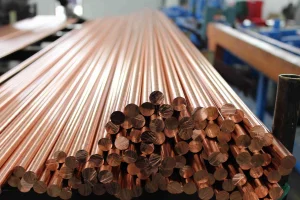
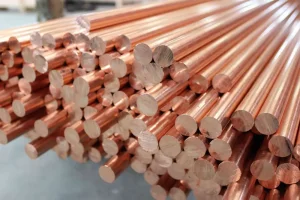
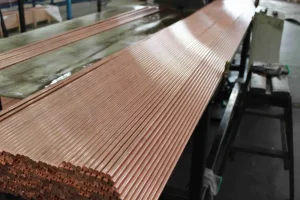
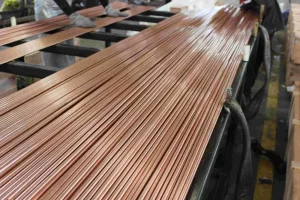
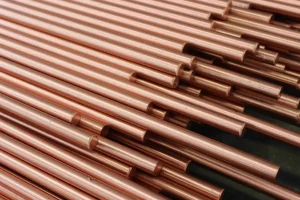
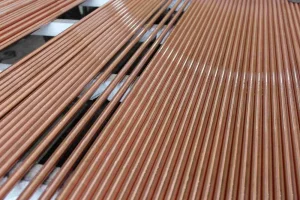
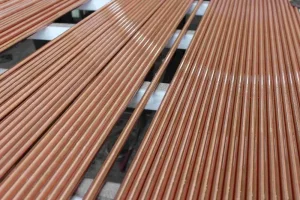
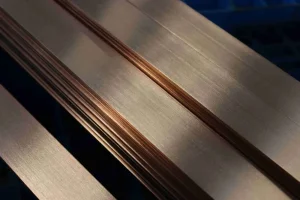
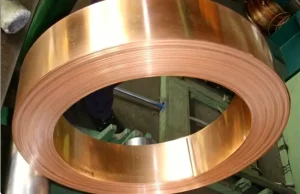
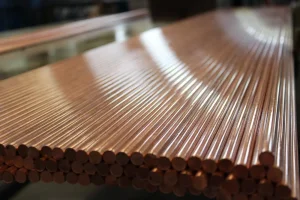
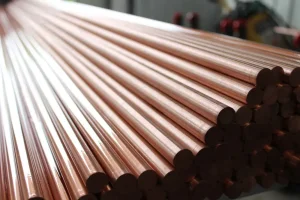
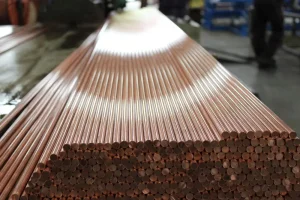
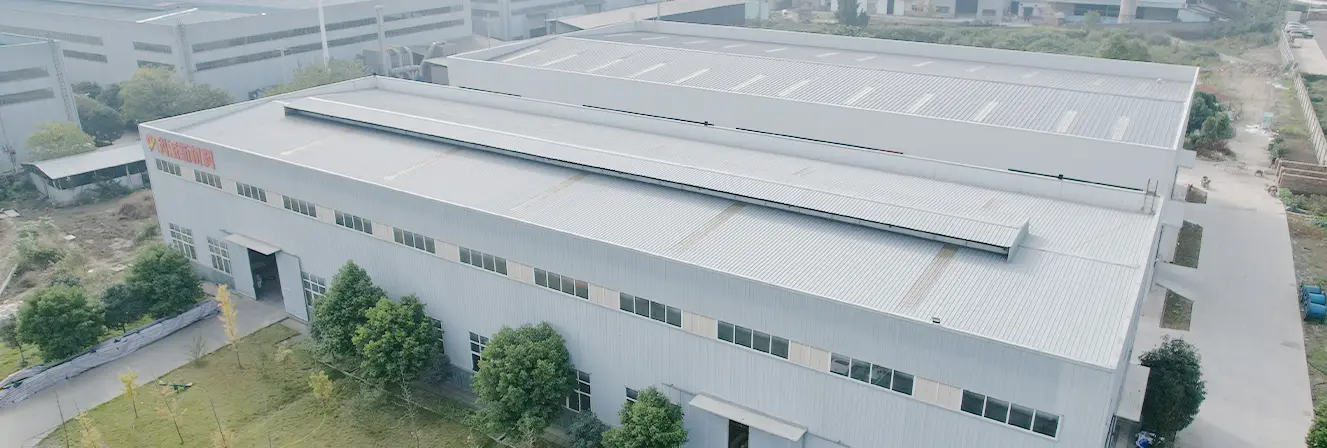
Established in May 2017, Kepai New Materials has redefined the standards of the special copper industry. We specialize in R&D, production, and sales of free-cutting tellurium copper, beryllium copper, and specialized alloys like CW110C (CuNi2Be). Our facilities integrate the entire supply chain from raw material casting to precision finishing, ensuring that every batch meets the rigorous demands of the global high-end manufacturing sector.
Providing the critical Information Gain required for high-stakes engineering decisions.
CW110C is a low-beryllium copper alloy (0.2-0.6% Be) balanced with Nickel (1.4-2.2%). Unlike high-beryllium alloys like C17200, CW110C focuses on a superior balance between high thermal conductivity and structural strength. Through a process of precipitation hardening, the Nickel and Beryllium form microscopic clusters that block dislocation movement, resulting in a material that can withstand high temperatures without losing its hardness.
| Property | Value (Typical) | Benefit to Industry |
|---|---|---|
| Electrical Conductivity | 45 - 60% IACS | High efficiency in power transmission & connectors |
| Tensile Strength | 650 - 800 MPa | Structural integrity under mechanical stress |
| Hardness (HV) | 200 - 260 | Resistance to wear and deformation |
| Softening Temperature | > 450°C | Maintains properties in extreme thermal environments |
CW110C offers better machinability compared to C17200. At Kepai, we utilize advanced vacuum melting and continuous casting to minimize impurity levels, which significantly reduces tool wear during CNC machining.
The addition of Nickel provides a protective oxide layer, making CW110C highly resistant to marine environments and chemical stress corrosion, outperforming standard brass and bronze alloys.
Essential for welding electrodes and heat exchangers. Its ability to dissipate heat rapidly prevents localized melting and extends the service life of industrial components.
The macroscopic shift towards electrification and high-precision automation is driving the demand for specialized CuNi2Be alloys.
With the rise of 800V charging architectures in electric vehicles, components like high-current busbars and charging pins require the high conductivity and heat resistance of CW110C to prevent overheating and ensure safety.
Weight reduction and reliability are paramount. CW110C is increasingly used in actuator bushings and landing gear components where weight-to-strength ratios and non-magnetic properties are required.
High-speed testing probes and 5G base station connectors rely on the elastic stability of CuNi2Be to maintain signal integrity over millions of cycles.
China has become a central hub for copper alloy production. Factories like Kepai offer a vertical integration model—from R&D to final export—providing a cost-efficiency gain of 20-30% compared to Western suppliers without compromising on IATF 16949 standards.
Reliability is built through certification and continuous innovation.
Developing oxygen-free tellurium copper and ultra-low lead CuNi2Be alloys for green manufacturing.
Rigorous testing: Spectrometers, tensile testers, and ultrasonic flaw detection at every stage.
Compliance with ISO9001:2015, ISO14001, and IATF 16949 for the automotive supply chain.
Technical consultation hubs and logistics networks spanning Europe, SE Asia, and North America.

Partner with Sichuan Kepai for high-performance CW110C CuNi2Be alloys and industry-leading technical support.
 Kepai New Material