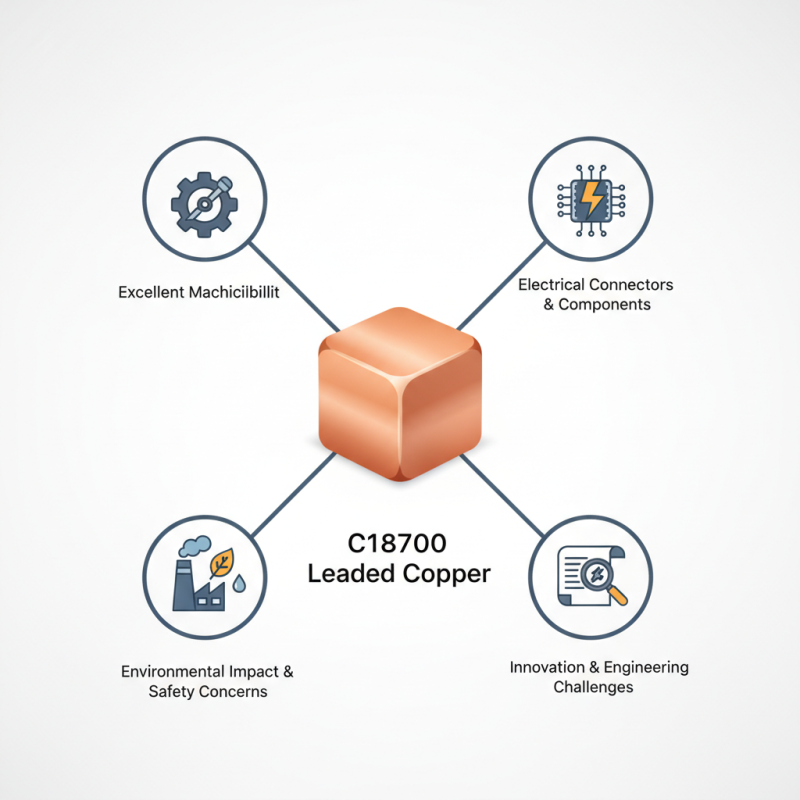
C18700 Leaded Copper stands out in the realm of industrial materials. This unique alloy consists of copper with a specific percentage of lead. Its properties make it invaluable across various applications. Industries rely on C18700 for its excellent machinability and electrical conductivity.
The integration of leaded copper into manufacturing processes enhances efficiency. This alloy is often found in electrical connectors and components. Its ability to be easily shaped allows for precise engineering. However, users must handle it carefully due to lead content. Balancing functionality and safety is crucial in its application.
C18700 Leaded Copper has proven effective in many settings. Yet, the potential environmental impact of lead cannot be ignored. Continuous innovation in alloy design is necessary. Striking a balance between performance and safety remains an ongoing challenge for engineers.
C18700 leaded copper, also known as leaded brass, is a copper alloy primarily composed of copper with added lead. This specific composition enhances its machinability. The typical chemical formula includes up to 3% lead, with the balance being mainly copper. Other elements like zinc and tin may also be present, affecting the alloy's properties. The lead content significantly improves cutting performance, making it ideal for various industrial applications.
In practice, C18700 leaded copper is commonly used in automatic machining processes. Its ease of fabrication makes it a popular choice for creating components like valves, fittings, and intricate machined parts. The alloy's resistance to wear and properties of electrical conductivity ensure its effectiveness in electrical components as well. Despite its advantages, the presence of lead raises safety concerns. Handling and exposure to lead must be managed carefully to minimize health risks. Industries must reflect on the balance between utility and safety when employing this material.
C18700 leaded copper, also known for its machinability, showcases properties that make it a valuable material in various industries. One of its prominent features is its excellent electrical conductivity, which reaches up to 45% IACS (International Annealed Copper Standard). This level of conductivity makes C18700 suitable for electrical connectors and switches. The alloy is also known for its high thermal conductivity, contributing to its use in heat exchangers and automotive applications.
Another critical property of C18700 is its enhanced machinability. With a machinability rating of 80%, it allows for precision manufacturing in challenging applications. This is essential in the production of intricate components, where tight tolerances are mandatory. Furthermore, the alloy demonstrates good corrosion resistance, making it suitable for environments prone to exposure to moisture and corrosive agents. This property is vital in industries like aerospace and marine engineering.
Despite its many advantages, C18700 leaded copper has limitations. The presence of lead, while improving machinability, raises health and environmental concerns. As industries strive for sustainability, alternatives with lower lead content are being explored. This shift may influence future applications and challenges in the use of C18700. Balancing performance with safety and environmental responsibility remains a pertinent issue for manufacturers.
C18700 leaded copper is a favored material in various manufacturing sectors, praised for its excellent machinability and conductivity. The alloy contains around 3% lead, enhancing its mechanical properties. This infusion allows for easier machining and shaping, making it ideal for intricate designs. According to industry reports, the demand for leaded copper in the automotive sector has seen a rise of 15% each year.
Common applications of C18700 include electrical connectors and switchgear components. These items require high conductivity and reliability. The aerospace and defense industries also leverage this alloy due to its resistance to wear and corrosion. A recent study highlighted that industries using leaded copper have reduced manufacturing costs by about 20% due to its machining efficiency.
However, some concerns linger regarding the use of lead in manufacturing. There are ongoing discussions about environmental impacts and health issues. Manufacturers must balance leaded copper's advantages with the need for safer alternatives. The future may see shifts towards eco-friendlier materials as regulations tighten. Overall, C18700 remains a significant player in the manufacturing industry, but its sustainability is under scrutiny.
C18700 leaded copper is recognized for its excellent machinability and conductivity. In many industries, it meets specific demands for reliable performance. C18700 contains a significant amount of lead, enhancing its machinability while maintaining good electrical properties. According to industry reports, its conductivity reaches 85% IACS, making it suitable for electrical applications.
When comparing C18700 with other copper alloys, distinct advantages emerge. Alloys like C11000 present higher electrical conductivity but lack the ease of machining that C18700 offers. On the other hand, high-strength alloys may reduce conductivity. For instance, C36000, another leaded alloy, provides good machinability but with only about 75% IACS conductivity. The trade-offs between strength and conductivity can be challenging for engineers.
Some applications, such as electrical switches and connectors, benefit from C18700’s unique properties. Despite its advantages, reliance on lead raises health concerns in manufacturing environments. Regulations may limit lead usage, prompting the industry to reconsider its applications. Balancing performance and safety remains a pressing issue in material selection. Practitioners must remain aware of these dynamics as they choose appropriate materials for their projects.
This chart represents the electrical conductivity of C18700 Leaded Copper compared to other common copper alloys. C18700 exhibits 90% IACS conductivity, making it a reliable choice in applications requiring good electrical performance.
C18700 leaded copper is widely used in several industries, including electronics and plumbing. However, its use raises environmental concerns. Lead is a toxic metal that can contaminate soil and water. Over time, exposure to lead can have serious health effects. Therefore, understanding the safety guidelines for handling C18700 is essential.
When using C18700 leaded copper, proper safety measures must be in place. Workers should wear protective equipment, such as gloves and masks. Continuous monitoring of air quality can help minimize lead exposure. Businesses should strive for proper waste disposal methods to prevent lead from leaking into the environment.
Despite its advantages in conductivity and machinability, C18700 leaded copper poses risks. Companies need to weigh these risks against benefits. Regular training on lead safety and compliance is vital. Being aware of the potential negative impacts ensures better practices in the industry. Environmental stewardship must remain a priority when using leaded materials.
: C18700 has excellent electrical and thermal conductivity, high machinability, and good corrosion resistance.
It has a machinability rating of 80%, allowing for precise manufacturing of intricate components.
It is used in electrical connectors, switchgear, and aerospace components due to its reliability and conductivity.
The lead content raises environmental and health concerns, as it can contaminate soil and water.
Workers should wear protective equipment and businesses must implement proper waste disposal methods.
There is a need to balance its benefits with health risks and explore safer material alternatives.
Industries have reported a 20% reduction in manufacturing costs due to its efficient machining properties.
Manufacturers may shift towards eco-friendlier materials as regulations on lead tighten in the future.
Regular training on lead safety and compliance is vital to minimize risks associated with lead exposure.
Balancing performance benefits with environmental responsibility is essential for sustainable manufacturing.
C18700 Leaded Copper is a specialized copper alloy known for its unique chemical composition, which includes a significant lead content that enhances machinability. This alloy exhibits key properties such as excellent conductivity, strength, and resistance to wear, making it a preferred choice for various industrial applications. C18700 Leaded Copper is commonly used in manufacturing sectors, including electrical components, plumbing fixtures, and precision machining, where its ease of fabrication and use in complex geometries are highly valued.
When comparing C18700 Leaded Copper with other copper alloys, it stands out due to its superior machinability, although it may have limitations in specific environments due to the presence of lead. Consequently, environmental considerations and safety guidelines are essential when using this material to ensure proper handling and minimize any health risks associated with lead exposure.

Kepai New Material